
Meet our Alumni - Maidul Islam

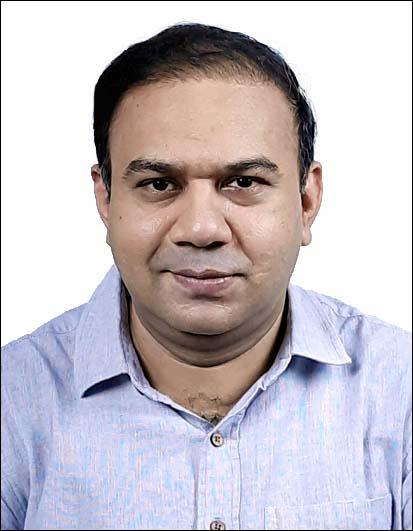
Maidul Islam is a Professor of Political Science at the Centre for Studies in Social Sciences, Calcutta.
For Maidul, life in Oxford began in 2007 with a full Clarendon Scholarship and a Hector Pilling Scholarship. He was later awarded a Senior Hulme Scholarship of Brasenose, a college book grant, the Departmental Studentship of the Politics and International Relations Department at Oxford, and the Hulme Completion Grant from Brasenose college.
His most important memories of the time were attending regular Centre for Political Ideologies lunchtime meetings, seminars, and conferences.
We spoke with Maidul and asked him how his studies influenced his career path:
My undergraduate training at Presidency College, Kolkata, followed by postgraduate studies in Jawaharlal Nehru University was further consolidated with my training at DPIR.
It was my dream to do a doctorate in Oxford, Cambridge, and London. I got a full scholarship at Oxford and my target was achieved. I must also acknowledge the Department of Politics and International Relations, which granted me a Departmental Studentship in the fourth year of my research (2010–11). It would have been impossible to get my doctoral degree in 2012 without such financial support.
What have you gone on to do since leaving DPIR and how did your time at Oxford influence that path?
The Clarendon and other such scholarships and studentships mentioned above immediately set my CV apart from that of many of my peers. I was soon recruited as an Assistant Professor of Political Science at the Tata Institute of Social Sciences (TISS) in August 2012, after receiving my degree in July 2012. Once TISS hired me, I never looked back.
I later became a Fellow at the Indian Institute of Advanced Study, Shimla, India, in early 2013, and then a faculty member in the Department of Political Science at Presidency University, Kolkata, in late 2013. After teaching for over two years at Presidency, my undergraduate alma mater, I moved to the Centre for Studies in Social Sciences, Calcutta (CSSSC) in early 2016. CSSSC is a reputed research institute in India and is globally renowned for its advanced research in the humanities and social sciences.
How do you hope your work or career contributes to the wider world?
Besides the theoretical and philosophical issues that I had engaged in my research, there has also been a practical element to my studies on Islamism and Muslim identity that has been reflected in my first two academic books, the first being published from Cambridge University Press, an outcome of my doctoral research and the second being published from Oxford University Press, a result of my Fellowship at the Shimla Institute.
My research is immensely helpful for academic and policymaking audiences in understanding the problems and prospects of South Asian stability by highlighting the possible strengths and weaknesses in Indo-Bangladesh Relations and the problems faced by Indian Muslims, while also examining new and alternative approaches to contemporary Islamic and International politics.
At present, I have moved on from researching Islam and Muslims at great length, with some marginal interest in the topic of Muslims and Islam. After two academic books in which I have mostly applied political theory in understanding the complexity of Muslim political identity and Islamist political mobilisation, I am now more interested in the universalist questions of political theory and political economy with specific reference to the issues of populist political mobilisation in Bengal, the evolution of the discipline of political science in twentieth century India, and the promise of alternative particularly concerning the transformation of global capitalism in the 21st century.
In some of the above-mentioned areas, I have already published academic papers and a collection of essays in book form, titled Political Theory and South Asian Counter-Narratives (Routledge, 2022). At present, I am writing my fourth academic book, Political Bengal: Populism in Government and Opposition (under contract with OUP Global). Besides area studies in general and South Asian politics in particular, my future research will also explore ideas of a just world by rethinking possible interventions to develop a cooperative theory of justice and a theory of cooperative justice.
What would you say to someone considering supporting graduate scholarships at Oxford?
I think it is essential for Oxford’s graduate funding to attract global talent and maintain its consistently high global rankings. The lasting value of scholarships like Clarendon is in supporting those who seek excellence, helping individuals grow professionally, become better people, and contribute positively to society, making the world a better place for everyone.