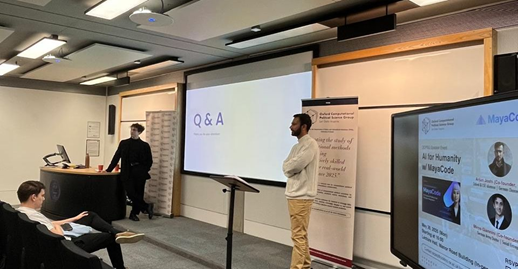

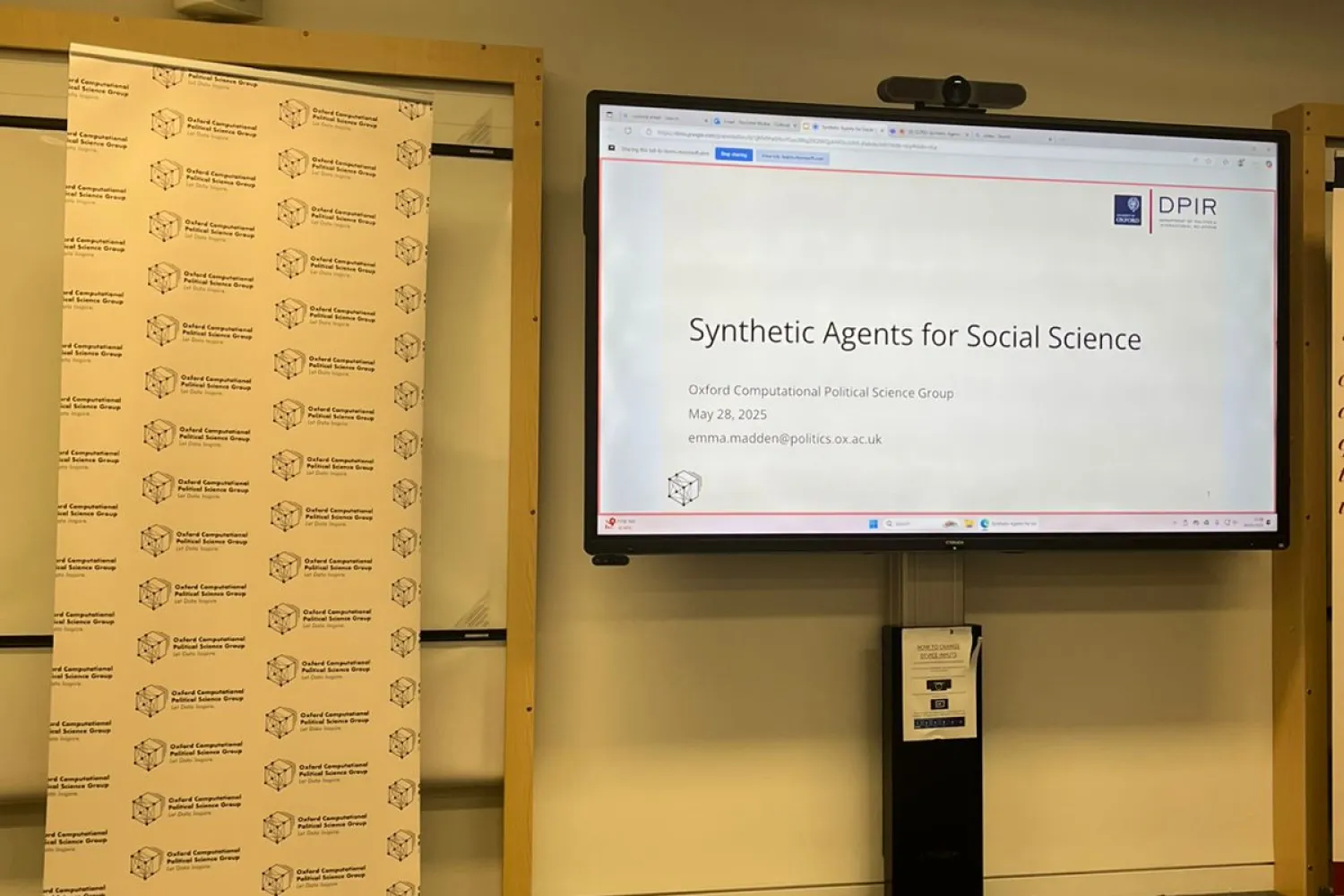
OCPSG hopes to train the next generation of computational talent by offering research opportunities, academic events, skill training workshops, and peer-learning initiatives, addressing the shortage of quantitatively skilled graduates. Upcoming events will place particular emphasis on equipping participants with practical skills and critical perspectives to use AI and computational tools effectively and responsibly in policy and social science contexts.
Previously, we hosted a speaker event, ‘Generative AI for Predictive and Causal Inference’ featuring Professor Kosuke Imai from the Department of Government and the Department of Statistics at Harvard University. In the 2025-2026 academic year, we hosted another event with Professor Cheryl Schonhardt-Bailey, FBA and Amara Jane Otero Salgado from LSE to present their paper ‘Measuring Empirically the Legal Conflicts over US Public Lands from 1960 to 2024’, which leverages LLMs to build an empirical dataset to assess competing narratives that have driven legal battles in the US in the modern era of environmental policy.
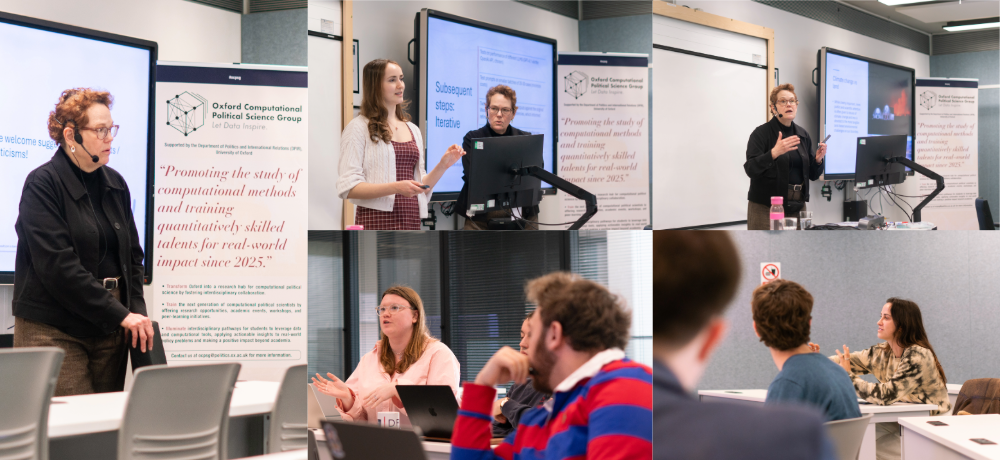
To raise awareness of computational methods and assist people in developing their expertise in this realm, we also ran a ‘Synthetic Agents for Social Science’ and ‘GitHub and Reproducibility’ workshop taught by our doctoral researchers.
We are planning a sustained workshop series and expanding the coverage of topics. If you are interested in volunteering to be an instructor for a skill training workshop, please do not hesitate to reach out to us. You do not necessarily have to be based at Oxford as we hope to promote cross-university and international collaboration.
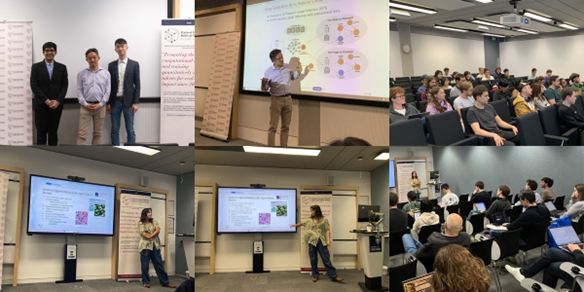
OCPSG aims to illuminate interdisciplinary pathways for students to leverage data and computational tools, applying actionable insights to real-world policy problems and making a positive impact beyond academia.
Previously, we held an industrial event featuring start-ups working on using AI tools to address refugee integration issues. We are also planning to organise policy hackathons to bring research training in computational methods and tools in a more applied setting, where participants can explore how to address real-life policy issues.
In addition, we aim to launch more initiatives like conferences and summits to promote the exchange of perspectives across disciplines and institutions.