

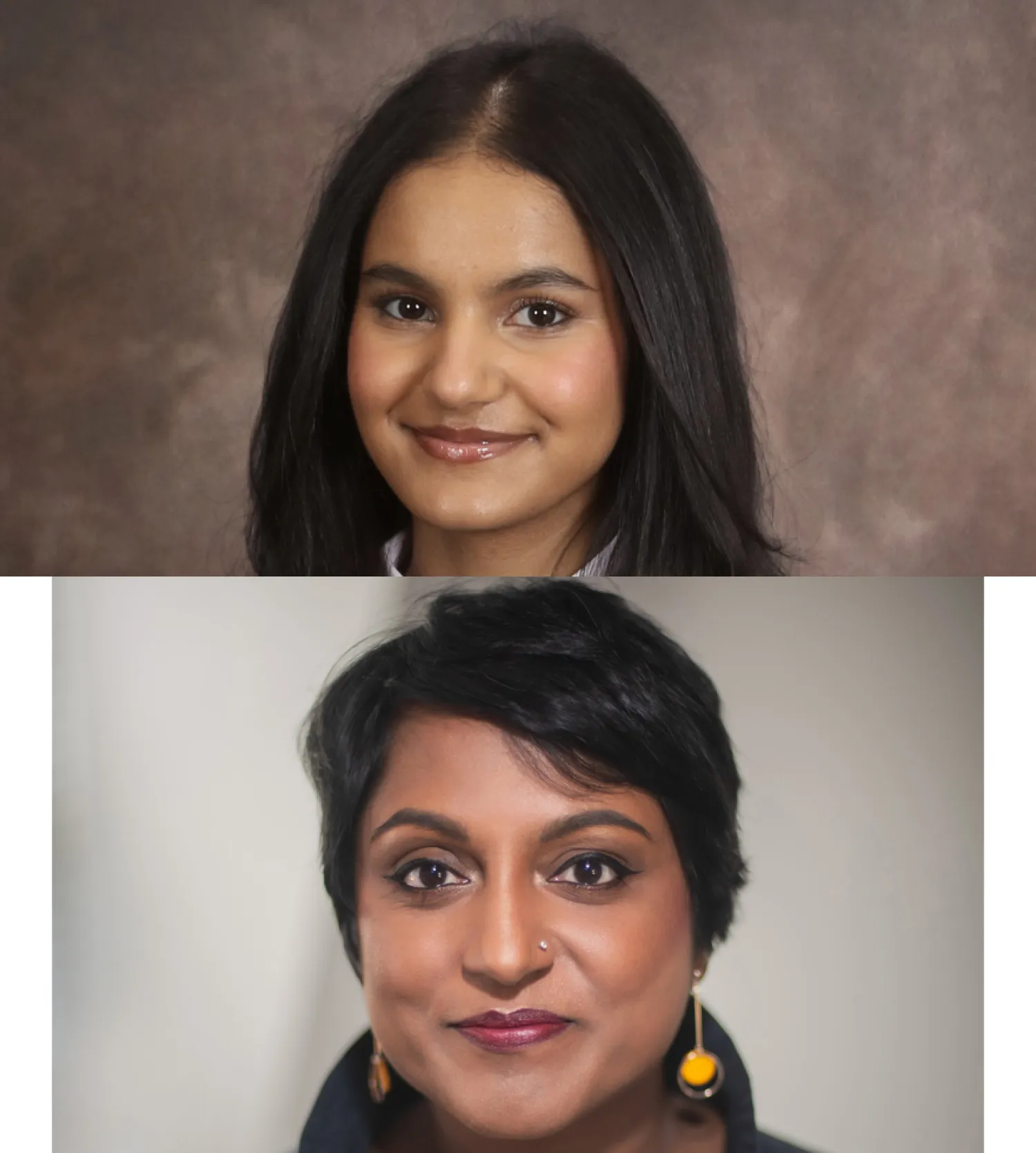
How would you describe the collaborative aspect of your student/supervisor relationship?
Devika: The collaborative aspect of our relationship can best be characterized by mutual respect in my opinion. Professor Sabaratnam has always made me feel heard and given me space to explore my interests. I have never felt any sense of inequality or imbalance in our relationship, and I appreciate very much that she has facilitated a dynamic where we can interact openly as peers. She has been incredibly supportive and understanding throughout my MPhil and has offered invaluable guidance and advice on numerous occasions.
An instance I think fondly upon is when we were able to finalize the topic of my thesis after a long period of wrestling with various ideas and trying to actualize them. I recall Professor Sabaratnam was very happy and intrigued when I proposed my topic to her, and it was lovely to see how excited she was for me to move forward with my thesis. The constructive direction she provided really helped round out my idea and gave me an understanding of how to proceed.
Meera: Devika has been an excellent student, with a lot of curiosity, thoughtfulness and insight on the subject all the way through. In our supervision relationship we work together, led by Devika’s research ideas and interests. I draw on my experience in the field to offer some guidance around how to frame and pursue questions, how to design an investigation and to make some connections with the wider literature, but this is really about supporting the direction of travel that Devika has already set out.
What impact does your student–supervisor collaboration have on your own academic voice/work as a scholar or researcher?
Devika: I think our collaboration has changed my academic nature and work quite a bit and for the better. I came across Professor Sabaratnam’s work during my undergraduate degree where I studied a discipline that is quite distinct to the field I’m researching in now. It was essentially her voice as a scholar that not only made me incredibly curious about international politics but further inspired me to apply to a MPhil in IR at Oxford. Throughout this Master’s, Professor Sabaratnam has taught me to be critical, interrogate what is considered natural, take few things for granted, be cognizant of my own ingrained assumptions, and approach gaps and puzzles with a staunch sense of impartiality. I believe these principles have allowed me to substantially develop and progress as a student and researcher.
Meera: I have been really excited to learn more about the area that Devika is researching for her MPhil thesis through our supervisory relationship – I find myself thinking about it a lot and enquiring more widely about it in conversation with others. This has had an impact on how I think about phenomena that I am also thinking about in my research endeavours. As a supervisor this is an amazing privilege – to see research in its flow and formation bringing together new ideas or shining a light on new phenomena.
In what ways do you co create knowledge, ideas, or innovations?
Devika: Perhaps dialogue is our greatest utilized tool for such endeavours. I often bounce ideas off Professor Sabaratnam in our supervision sessions, and in return, she directs my attention to various avenues that I had not known of or thought to go down. I believe it is through discussions with such sustained back-and-forth that we have arrived at our greatest innovations and solutions.
Meera: We work together really well in terms of refining ideas and issues through dialogue – Devika is a very perceptive and thoughtful listener which is a blessing for a supervisor, and she is really quick to pick up what we are talking about and see how it can apply to a wider set of examples or issues for her research.
What have you learned from each other through working together?
Devika: It is illuminating to become aware of one’s own instinctive, intrinsic conceptions, and freeing to learn how to move past them. I am very grateful to Professor Sabaratnam for consistently pushing me to become conscious of my own presuppositions, understand why they exist, and develop an academic voice free of their influence. Three words I would choose to summarize our working relationship are communicative, attentive, and compassionate.
Meera: I have learned a lot from not just the subject matter that Devika is working on, which I was not really familiar with previously, but also, I have appreciated seeing how she is putting together the project methodologically and combining different data gathering approaches. It is really refreshing to see issues through the eyes of other researchers, and this also inspires me in thinking about future projects.
Looking to the future - what are you excited to build, explore, or achieve next — together or individually?
Devika: Looking forward, I am incredibly excited to complete my research under the guidance of Professor Sabaratnam. The topic of my thesis is something I have become very passionate about, and I have increasingly enjoyed working on it. In the coming months, I am eager to submit a piece of work that both Professor Sabaratnam and I are pleased with and proud of.
Meera: I’ve been delighted to work with Devika on this MPhil thesis project and I’m excited to see where she takes this interest next in terms of her professional development.
What hopes do you have for future generations of women scholars at DPIR?
Devika: I truly hope future generations of female students and researchers at DPIR are able to receive mentorship from the women scholars of Oxford. It is enormously inspiring and empowering to work with female academics that embody intelligence, capability, tenacity, and perseverance. The experiences and guidance of the women that came before us are reminders not only of the barriers they had to dismantle, but also to take up space and have faith in your own potential.
Meera: There are many inspiring women scholars in DPIR, but I would definitely like to see more of them across all of our subfields. I hope that future generations of women scholars will feel absolutely confident that they can bring their best and full self to the field of politics and open up different ways of thinking and working together.
Find out more about Devika and Meera’s work.