

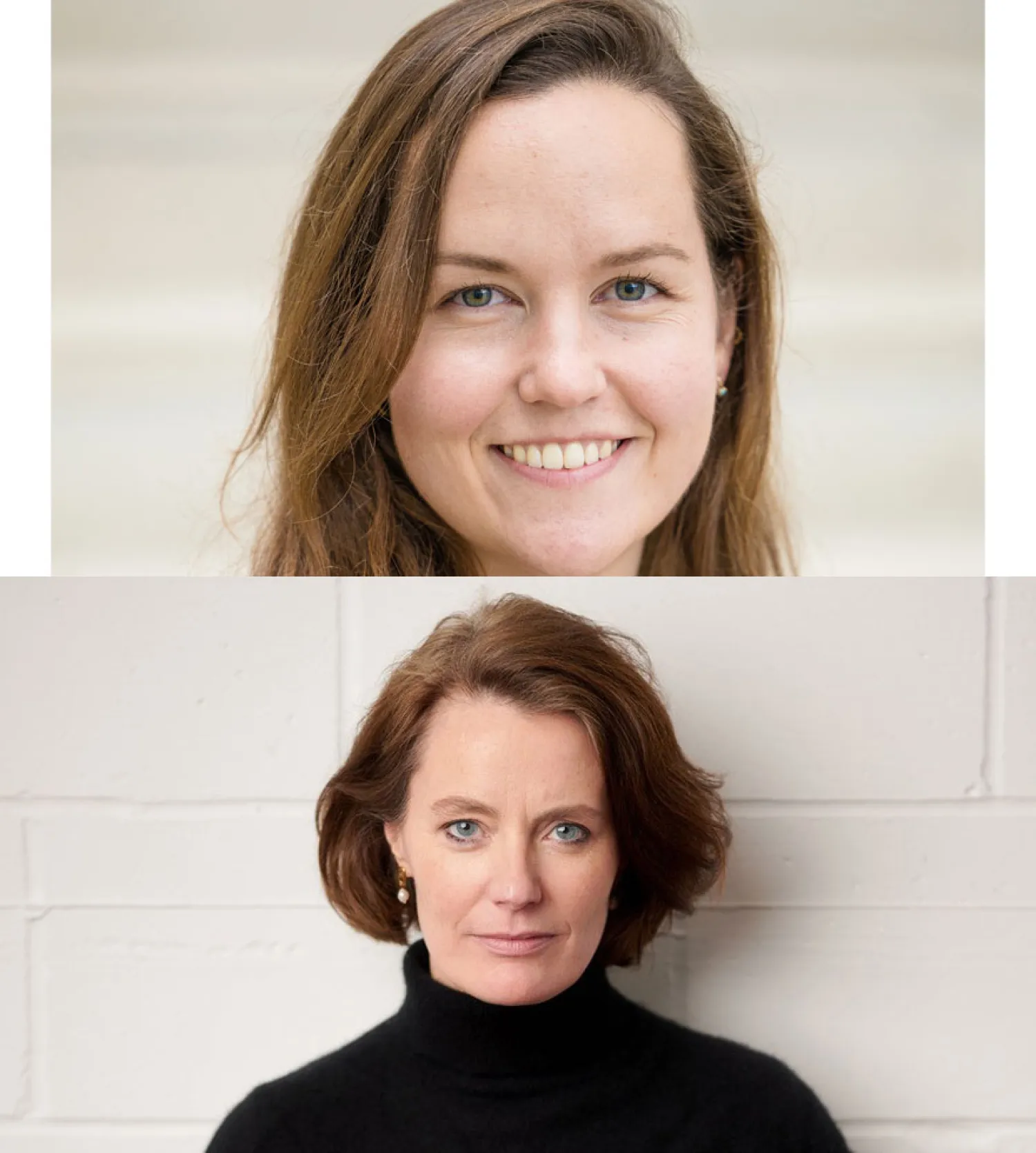
How would you describe the collaborative aspect of your student/supervisor relationship?
Isabelle: Patricia was my supervisor for the MPhil in International Relations (2020-2022) and supervises my DPhil in International Relations (2022-present). New to International Relations as a discipline, I felt consistently encouraged, supported, and challenged by Patricia to engage creatively with the most difficult questions about world politics during the MPhil. Patricia’s generosity in time, expertise, constructive critique, and mentorship was unfailing despite the challenges posed by the pandemic, bringing intellectual rigour, discipline, and steadiness to my education in IR.
As Patricia’s research assistant, I learned about the challenges and rewards of historical enquiry. I learned how to comb through archives thoroughly but deliberately. Through exposure to archival traces of historical women thinkers on whom Patricia is an expert, I became aware of the extraordinary breadth, depth, and richness of twentieth-century international thought, much of it often only preserved in archival fragments and yet to be brought to bear on prevailing histories and canons of international relations.
Five years later, I feel incredibly fortunate and proud to have developed a strong intellectual rapport with Patricia. Patricia has guided and supported me to take a range of teaching and research assistant positions, international research fellowships, and conference and publishing opportunities. I always feel met by Patricia as a peer and colleague, enjoying mutual respect, curiosity, and drive to improve the ways in which we conceive of and enquire about world politics.
Patricia: I think/hope our relationship has felt genuinely collaborative from quite early after the start of Isabelle’s MPhil in 2020 through to the DPhil, which is now very close to completion. This was not simply supervisory guidance flowing in one direction, but an ongoing intellectual exchange in which Isabelle’s work has repeatedly shaped how I think. One moment stands out. During a roundtable discussion of my recent book, Isabelle asked some of the most difficult questions put to me. That kind of intellectual courage, the refusal to soften a challenge paired with real intellectual generosity, is rare.
What impact does your student–supervisor collaboration have on your own academic voice/work as a scholar or researcher?
Isabelle: Our student-supervisor collaboration is the single most important influence on my development and growth as a scholar. As a scholar, Patricia has taught me how to examine political ideas at the intersection of international relations, political theory, and intellectual history with the seriousness and rigour they deserve. As a teacher, I try to embody the values of equality, precision, and respect that Patricia models as a mentor and teacher.
Our collaboration has further taught me how to bring historical and analytical discipline to some of the most fundamental international political questions: how productive political relationships are forged across difference; how hierarchies in world politics are contested and transformed; how power shapes our understanding of what international relations is and whom it elevates or erases. This intellectual formation will undoubtedly shape and inform how I think, write, and collaborate for the rest of my professional life.
Patricia: Without question, I think differently about my own research because I’ve read so much of Isabelle’s research and writing on practices of “white allyship” in efforts to resist racial domination. Her conceptual clarity and ethical insistence have sharpened my own sense of what is at stake in writing international intellectual history. This shows up directly in how I interpreted key figures in current and future work.
In what ways do you co‑create knowledge, ideas, or innovations?
Isabelle: Patricia and I largely co-create knowledge, ideas, and innovations through discussion in supervision. Our conversations are usually grounded in draft material I send ahead of time, guided by Patricia’s comments and my own questions about my evolving work. Our focus sometimes lands on finessing smaller details and sometimes on bigger questions that send me back to the drawing board, but always with intellectual generosity and precision that continuously improve my work and thinking. Patricia understands my work from the inside out, both as a leader of the growing field of women’s international thought and a longstanding mentor to me. This makes her comments and criticism enormously valuable and productive for me, and I spend time turning over our conversations to help find my way through intellectual challenges as I prepare drafts for subsequent supervisions.
Where our work overlaps substantively in its focus on twentieth-century international thinkers, we are occasionally treated to glimpses of how the political lives of the women we study were interwoven – moments of archival sublime. For example, my work on the international feminist and socialist Sylvia Pankhurst and Patricia’s work on leading British imperial thinker, Margery Perham, together surface a sustained engagement between the two women at loggerheads over the independence of Ethiopia over at least two decades.
Patricia: Mostly through sustained conversation in supervision when we’re circling a conceptual problem until something clicks and Isabelle writes about in the next draft chapter. The emphasis is usually Isabelle’s work, of course, but the co-creation comes from the shared labour of discussing her ideas and pushing them a little bit further. In terms of my own work, Isabelle has co-created knowledge as a research assistant and in workshopping the first full draft of my recent book. Her detailed commentary on the text was extraordinary: precise, unsparing in the best way, and deeply constructive. It led to significant revisions of the manuscript.
What have you learned from each other through working together?
Isabelle: I’ve learned from Patricia how to think, research, and write with theoretical clarity, historical discipline, and authority. In particular, Patricia has challenged and supported me to develop an authoritative academic voice, to express myself as a scholar – and particularly as a woman scholar – without unnecessary deference, doubt, or equivocation. Through working with Patricia, I have also learned that being generous to others with my time, resources, comments, and ideas stands to improve my work as much as it might improve theirs.
Three words: generous, assiduous, ambitious.
Patricia: I’ve learned from Isabelle what it looks like to combine historical and analytic rigour with ethical seriousness. I hope she’s learned from me something about historical craft: how to shape an argument over time, how to trust revision, and how to hold onto a voice even when constrained by academic convention.
Three words: respectful, supportive, exacting.
Looking to the future - what are you excited to explore, or achieve next — together or individually?
Isabelle: As I am in the final stretch of the DPhil, I look forward to completing the thesis I set out to write and to taking a next step in my career that marries what I have learned from doctoral research with my background in policy and applied research. I hope to enjoy a lifelong intellectual relationship with Patricia which continues to be as enriching as it has been throughout my time at Oxford.
Patricia: In the immediate future, I’m excited to see Isabelle finish the DPhil and to watch her work land with the impact it deserves. Personally, I’m hoping to persuade her to stay in academia. She is such a brilliant scholar, and our discipline would be better with her in it. Whether we collaborate formally or simply remain in each other’s intellectual orbit, and whether Isabelle stays in academe or not, I’m excited by the prospect of continuing our conversations.
What hopes do you have for future generations of women scholars at DPIR?
Isabelle: I hope future generations of woman scholars at DPIR will feel a strong sense of belonging in a department that models and resources a pluralistic approach to studying politics. I hope women scholars will benefit from and continue to embed a culture of collaboration, mentorship, respect, and intellectual curiosity.
Patricia: I hope future generations inherit academic structures that take collaboration and mentorship seriously as real work that is trained for, resourced, and recognised in promotion and workload. I hope they inherit environments that reward intellectual risk-taking, and that genuinely make room for the vibrant, intellectually and methodologically plural scholarship.
Find out more about Patricia Owens and Isabelle Napier.