
Life After DPIR: Meet Dr Daniel Zoughbie - DPhil alumnus in International Relations, 2008


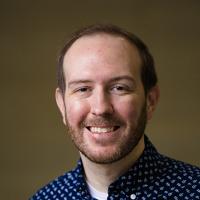
Daniel, who studied at Oxford as both a Marshall and a Weidenfeld Scholar, is a complex-systems scientist, historian, and expert on presidential decision-making.
He currently serves as an associate project scientist at the UCSF/UCB Centre for Global Health Delivery, Diplomacy, and Economics at University of California, Berkeley, and holds faculty affiliate positions at the Institute of International Studies and the New England Complex Systems Institute.
In his latest book Kicking the Hornet’s Nest: US Foreign Policy in the Middle East from Truman to Trump, Dr Zoughbie investigates eight decades of American decision-making in one of the world’s most volatile regions.
We spoke to Daniel about his time at DPIR studying International Relations:
Can you tell us a little about your time at Exeter College, Oxford, and your experience studying DPhil in International Relations? Perhaps a particularly memorable interaction comes to mind?
One particularly memorable Oxford experience was in the University Parks on a beautiful sunny spring day. I was going to have a little picnic but saw Philosophy Professor Richard Swinburne deep in thought taking a walk. I didn't want to interrupt him, but I had a nagging question about Immanuel Kant's Critique of Pure Reason that I felt he could answer. So, I introduced myself and he kindly asked me to join him for his walk. However, I was holding a foot-long cheese baguette, and among some more traditional Brits, walking with food is frowned upon. So, he asked me to "do something with that," gesturing towards my baguette. I didn't have a bag, so I shoved the half-wrapped baguette in my back pocket. As we walked and talked, I could feel the baguette break in two, leaving a trail of tomatoes and cheese. Needless to say, he answered my question.
How important were your studies in Oxford in laying the foundation for your career and what was your biggest learning?
The most important lesson that I learned at Oxford was that social problems are not limited to a department or discipline. I used to enjoy my college lunches and dinners with students from physics, classics, anthropology, biology, etc. and feel that I learned as much from them as I did from my formal lectures and tutorials. I used to love going to college, departmental, or university libraries and selecting books to read that had been recommended to me by others. I remember one book in particular -- The Arrow of Time by Coveney and Highfield. It was a book that delved into topics like entropy and quantum mechanics, but it profoundly shaped my thinking about how and why societies think about time differently. In particular, I began to think about how international security is profoundly shaped by philosophies of history and differing assumptions about time reckoning.
"I came to view the international system as an incredibly complex phenomenon that could be studied through different multi and interdisciplinary lenses."
What impact has studying International Relations at the DPIR had on your current role today as Associate Project Scientist at the Institute of International Studies at UC Berkeley?
In brief, my studies allowed me to explore the complexities of social order at all levels. I was working at a grassroots level, developing a new "microclinic" social network-based health care model for low-income and refugee populations in the Middle East. At the same time, I was interviewing heads of state and other global figures. So, I thought a lot about the micro foundations of international affairs, behaviours that cascade and might flow upwards to that level. At the same time, I thought a lot about the reverse. I came to view the international system as incredibly complex phenomenon that could be studied through different multi and interdisciplinary lenses.
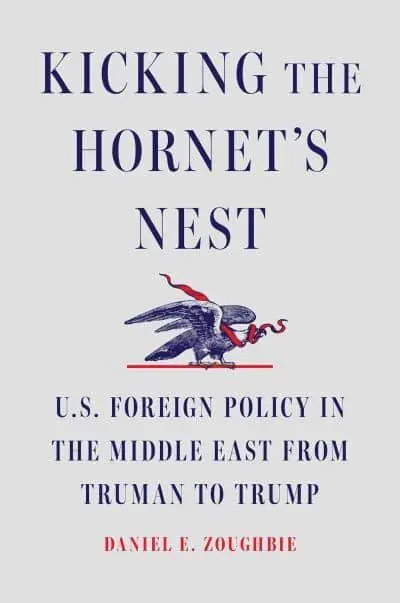 Your latest book, Kicking the Hornet’s Nest has received wide praise – what do you hope it will achieve?
In brief, I hope it will push people from all walks of life to reconsider some fundamental assumptions. It was humbling for me to take on a book project of this magnitude. It's been said that the more you know, the more you realize how much more there is to know.
The book is an academic book but written so that a first-year or even a casual reader might easily understand it. It is focused on US foreign policy, but the lessons contained within the book are generalizable. The book explores the decisions of 13 presidents in a way that breaks new ground, and in some cases, totally changes the way we think about war and peace from the post WW2 era until the present. I want policy makers especially to understand what Gerald Ford got right and what all the others got wrong.
"In brief, my studies allowed me to explore the complexities of social order at all levels."
Do you have a message to perspective researchers and students applying to Oxford, particularly those considering a career in foreign policy or international security?
I would encourage prospective students to consider the stakes. There are few disciplines and professions that deal with truly existential issues. I would encourage prospects to think about how science and technology are rapidly upending old assumptions about how states and non-states behave and why. I would also encourage an interdisciplinary view of international affairs.
Find out more about Daniel’s new book.
If you’d like to share your story of life after studying at the Department of Politics and International Relations, please email the Department's Alumni Relations team.