
New Book Unpacks How US Decisions Shaped Middle East Turmoil

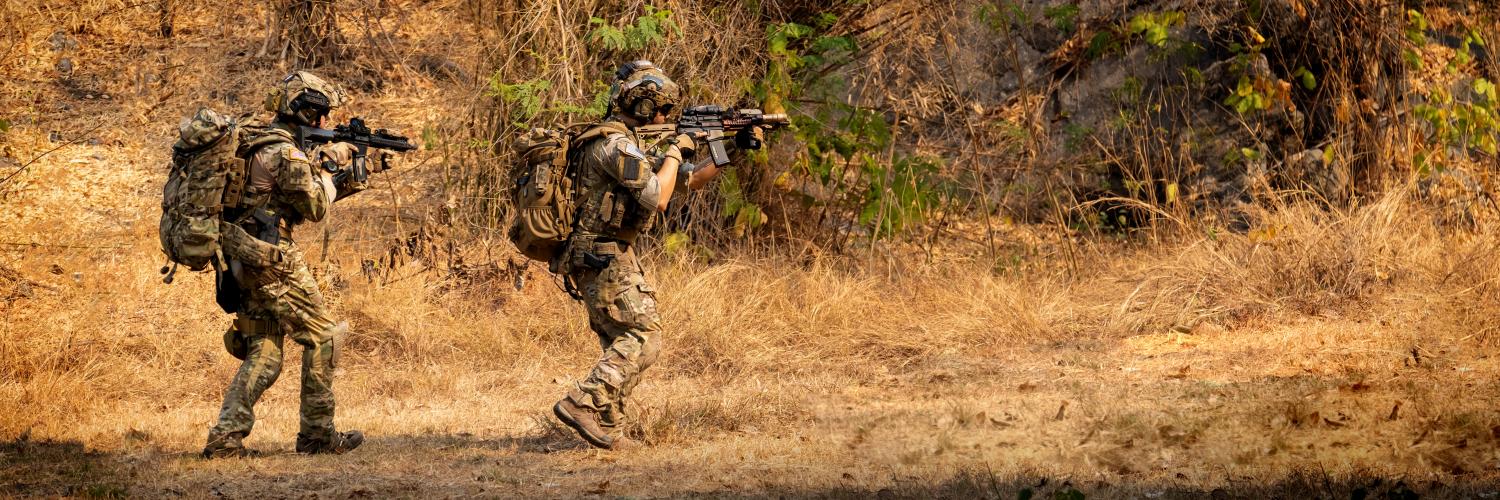
DPhil alumnus in International Relations, Daniel Zoughbie’s latest book Kicking the Hornet’s Nest: US Foreign Policy in the Middle East from Truman to Trump, investigates eight decades of American decision-making in one of the world’s most volatile regions.
From Truman to Trump, twelve US presidents have tried to shape the Middle East—often prioritising defence over diplomacy and development. According to Zoughbie, these choices have fuelled instability, terrorism, and nuclear proliferation risks. His book argues that only one president took a better path, and that today’s challenges demand a return to “soft power” strategies.
Dr Zoughbie, who studied at DPIR as both a Marshall and a Weidenfeld Scholar, is a complex-systems scientist, historian, and expert on presidential decision-making. He currently serves as an associate project scientist at the Institute of International Studies at UC Berkeley and holds faculty affiliate positions at the UCSF/UCB Centre for Global Health Delivery, Diplomacy, and Economics and the New England Complex Systems Institute.
Q&A with Dr Daniel E Zoughbie:
What drew you to this field of study and to writing this book?
I was partially drawn to the field of international security and foreign policy as a result of my work in the field of global health and development. My efforts involved creating behavioural interventions for the prevention and management of type-2 diabetes in the Middle East. I became interested in human behaviours, human decisions—not just at a micro scale but at a macro level.
What struck me was both how important top-down decision-makers—especially US presidents—were to just about every aspect of life for the region’s hundreds of millions of people. And also, how frequently they failed in their ability to “manage history.” In other words, they were good at shaking things up and making things a lot worse. But terrible at meeting fundamental personal and national objectives. I had the benefit of observing first-hand how people in the region and around the world reacted to the projection of American power—in ways that were unexpected and too many to count. Defiance, fear, anger, violence, bitterness. This is what I call Tolstoy’s Law, and it is pretty much the only iron law of international relations. What was said by the ancient prophets and philosophers was true for Napolean—and was and remains true for US presidents. The plans of the powerful are confounded by the twists and turns of the historical process.
Did anything surprise you in your research?
I was shocked by my conclusion: that Gerald Ford would have been the president to look to as the model. Not Bush Sr. Not Carter. Not Eisenhower. But Gerald Ford, who was never elected president.
I went into this research thinking that I would find that US foreign policy was a bit more successful at protecting its own national interests—at least under some presidents who are thought to have been a bit more sober-minded. The major players advising the presidents—and the presidents themselves—were often brilliant people with high IQs. Sometimes, they were people, frankly, with good intentions who I could somewhat relate to at a human level. They faced enormous strain and peril.
Yet time and again, they shot the country and themselves in the foot. Many fought through and lived through hell. The twentieth century was hell if you think about it. Some estimate that up to 120 million people died. Technology had made it possible to end all human life. But we now risk making the twenty-first century a deeper hell. When we start seeing countries with nuclear and threshold nuclear capabilities exchanging threats and engaging in kinetic attacks—this should be very sobering.