
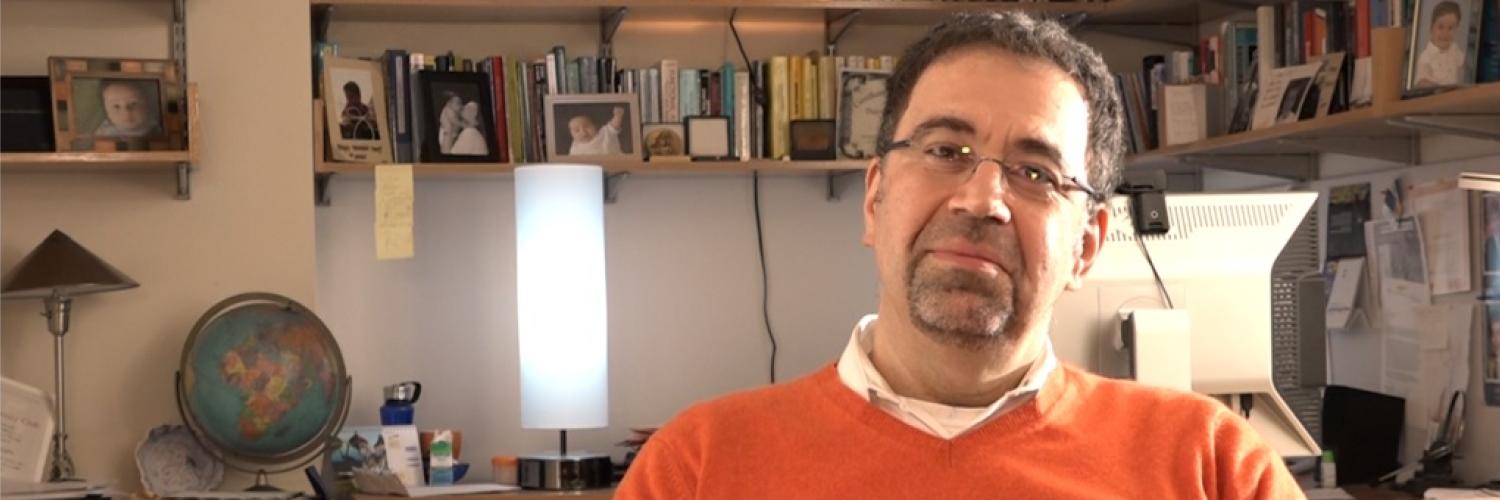
Nobel-prize winning economist Professor Daron Acemoğlu discusses the future of AI at Q&A session
Share
Current choices in AI development, regulation and deployment will determine whether its benefits are largely shared or concentrated among a small group of firms and investors.
That was one of the key observations shared by MIT Professor of Economics Daron Acemoğlu in a recent Q&A he delivered ahead of receiving an honorary degree at Oxford’s Encaenia ceremony the following day.
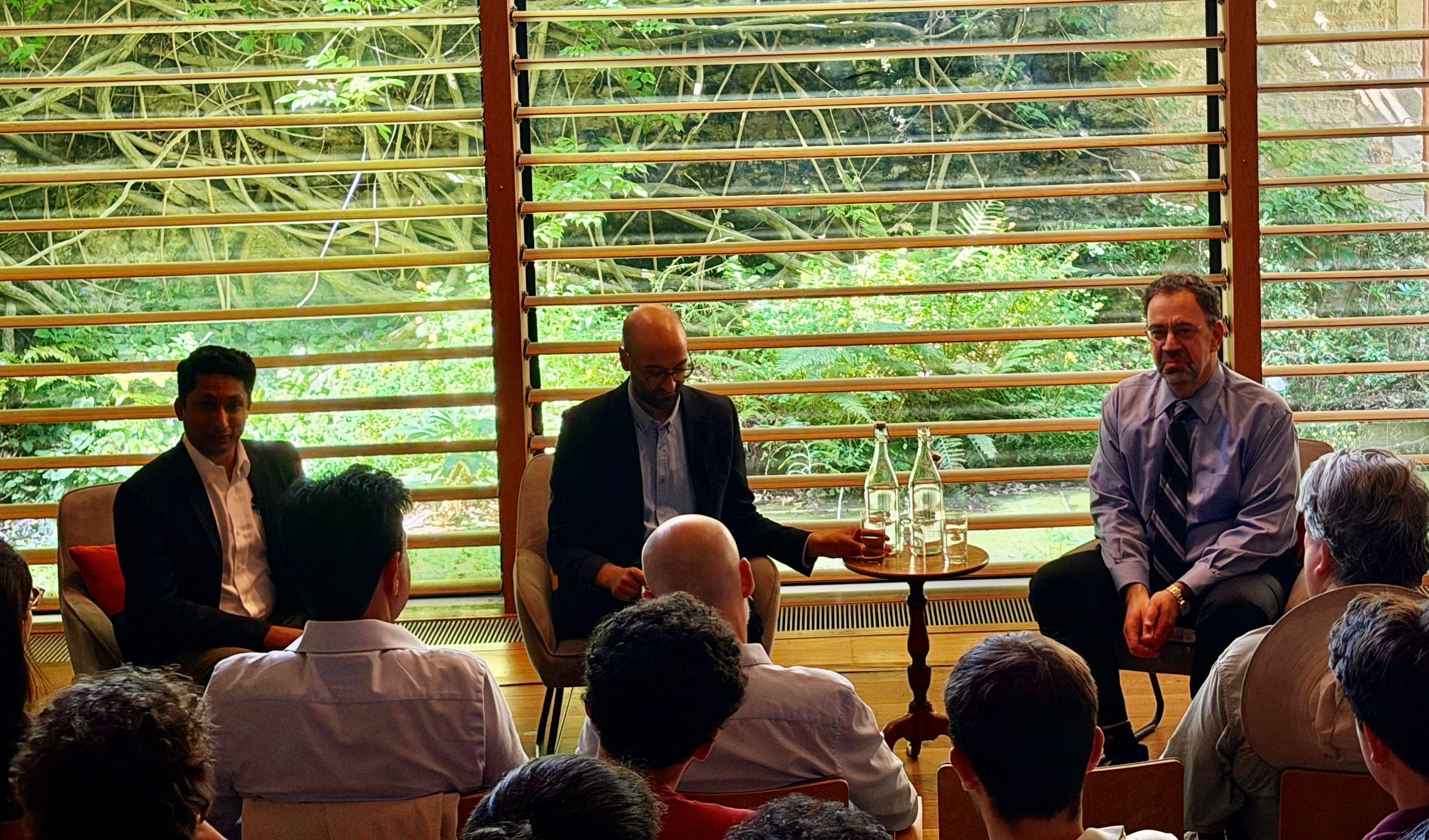
The event was jointly organised by DPIR and the Department of Economics and held in the Shulman Auditorium at The Queen’s College on Tuesday 23 June. It was chaired by Dr Ranjit Lall (DPIR) and Professor Jean-Paul Carvalho (Economics).
During the session, Professor Acemoğlu suggested that current AI investment is predominantly focussed on replacing human tasks rather than augmenting workers’ capabilities.
He also raised concerns about the use of AI in education (noting that current research to date has only focused on middle and high school education, rather than higher education):
“This [AI] is a massive social experiment that we're doing without any guardrails.”
Professor Acemoğlu also expressed concern that AI-driven automation may increase inequality and disrupt employment, reducing demand for certain workers – particularly entry level and routine jobs.
And he argued that the economic benefits of AI may be smaller than many predict, expressing scepticism over predictions AI will produce a dramatic ‘growth explosion’.
On receipt of his honorary degree, Professor Acemoğlu commented ‘I am deeply honoured to be recognised by Oxford University in this manner and have been very much looking forward to the honorary degree ceremony today.’
Professor Daron Acemoğlu, economist, joint recipient of the 2024 Nobel Prize in Economic Sciences, Institute Professor at the Massachusetts Institute of Technology (MIT) and Faculty Co-Director of the Stone Center on Inequality and Shaping the Future of Work.