

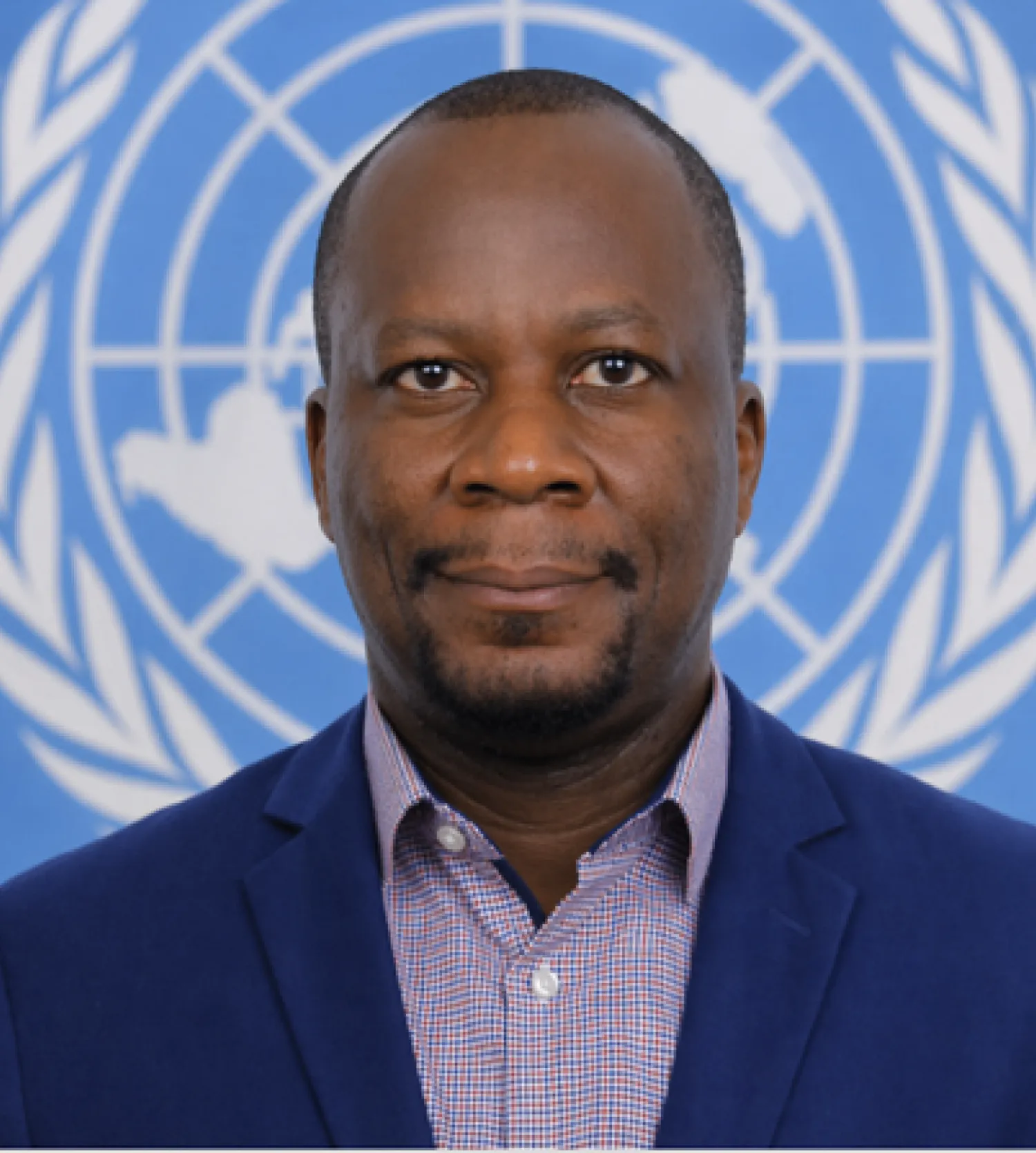
The Department of Politics and International Relations welcomes Obatoki F. Adam Salami to the first-of-its-kind UN Peace & Security Fellowship.
Research
Focusing on MONUSCO in eastern Democratic Republic of Congo and MINUSMA in Mali, Obatoki's research assesses whether existing peacekeeping doctrine and operational strategies remain effective in increasingly hostile environments. The study aims to identify gaps and propose practical adaptations to UN peacekeeping frameworks to better address civilian protection challenges in contemporary conflicts.
Interview
What motivated you to apply for and join the Fellowship?
The fellowship gives me the opportunity to engage in meaningful exchanges between practitioners and scholars, which will allow me to reflect more critically on my work in peacekeeping operations—an area in which I have been actively engaged for the past fifteen years. I am particularly interested in broadening my perspective by engaging academic actors and fellow colleagues on contemporary peace operations. In addition, the possibility of conducting research and publishing academic articles or a policy paper under the guidance of an academic mentor has represented also a source of motivation. Over the past 15 years, I have accumulated significant practical knowledge and field experience in peacekeeping operations, which I believe can contribute to adapting peacekeeping to increasingly complex operational environments. Finally, I see this fellowship as an opportunity for professional development that can also support future career aspirations.
How do you feel about coming to Oxford to study here for eight weeks?
The University of Oxford and its Department of Politics and International Relations have a world-renowned academic reputation. I am therefore deeply honoured and excited to have the opportunity to come to Oxford and benefit from the University’s outstanding expertise and intellectual environment in the field of peace and security. I would like to take this opportunity to express my sincere gratitude to the Department of Peace Operations (DPO) and the University of Oxford for establishing this innovative programme.
What are you most looking forward to during the programme?
During the programme, I look forward to gaining scholars’ perspectives on the peacekeeping work we carry out in the field. I am also eager to exchange ideas with fellow participants and learn from their professional and personal experiences in peacekeeping missions. Finally, I hope that the insights gained from this fellowship, combined with my field experience, will strengthen my ability to contribute more effectively to the strategic goals of peacekeeping operations, in line with the priorities of the Action for Peacekeeping+ (A4P+) agenda.
Could you tell us a little about your research and its aims?
This research examines how United Nations peacekeeping missions protect civilians and promote stabilisation in environments shaped by terrorism and asymmetric warfare. Focusing on my own experience in the Eastern Democratic Republic of Congo, particularly in Beni, North Kivu, affected by Allied Democratic Forces/Islamic State in Central Africa Province (ISCAP), the study will evaluate whether the current peacekeeping doctrine and operational strategies remain effective in this complex and hostile security contexts. It seeks to identify gaps between mandate, doctrine, and operational realities, and to propose possible adaptations to UN peacekeeping frameworks in order to strengthen civilian protection and stabilisation efforts in conflicts characterised by this kind of asymmetric threats.