

Jacob Williams
Jacob Williams
 My research examines conservative and religious political thought (especially in the Christian and Islamic traditions) and its intersection with the problems of pluralism and tolerance. My thesis explores the new ‘postliberal’ movement and its critique of liberal neutrality as a mask for the imposition of a controversial doctrine of autonomy and self-expression on more traditionally-minded citizens. Through analysis of the normative implications of religious and philosophical pluralism and of the real-world consequences of liberalism ‘as a way of life’, I argue that an attractive and sustainable middle-ground position of pluralistic and constrained perfectionism can repair the damage done by liberalism’s specious appeal to neutrality without resorting to authoritarian alternatives that give up on the ideals of mutual tolerance and respect.
College: Green Templeton College
Supervisors: Paul Billingham
Pascal Mowla
Pascal Mowla
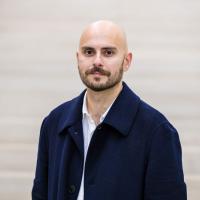
My research investigates the ethics of partiality, institutional design, and the distribution of opportunities in contemporary societies, with a particular focus on the normative status of nepotism. My thesis, What Makes Nepotism Wrong?, provides the first sustained philosophical treatment of nepotism, critically engaging theories of impartiality, corruption, allocative efficiency, equal opportunity, and discrimination. Using nepotism as a test case, I examine the limits of these theories and develop a hybrid framework for distinguishing permissible from impermissible forms of favouritism in both public and private institutions. In doing so, I advance a novel account of political corruption and argue that the impermissibility of nepotism within private institutions depends on how it affects individuals’ interests in efficiency and opportunity. Drawing on contractualist theory, I develop a framework for balancing these egalitarian interests against significant liberty interests in association, expression, and occupational choice. By analysing the non-ideal conditions under which individuals and institutions allocate advantageous socioeconomic positions, my research offers a principled account of the permissibility of nepotism and, more broadly, of the ethics of allocating scarce educational opportunities and jobs. This work contributes to broader debates about corruption, meritocracy, equal opportunity, and meaningful work, and clarifies how individuals and institutions can act justly in contexts where state intervention is infeasible or undesirable.
College: Oriel College
Supervisors: Paul Billingham , Stuart White