

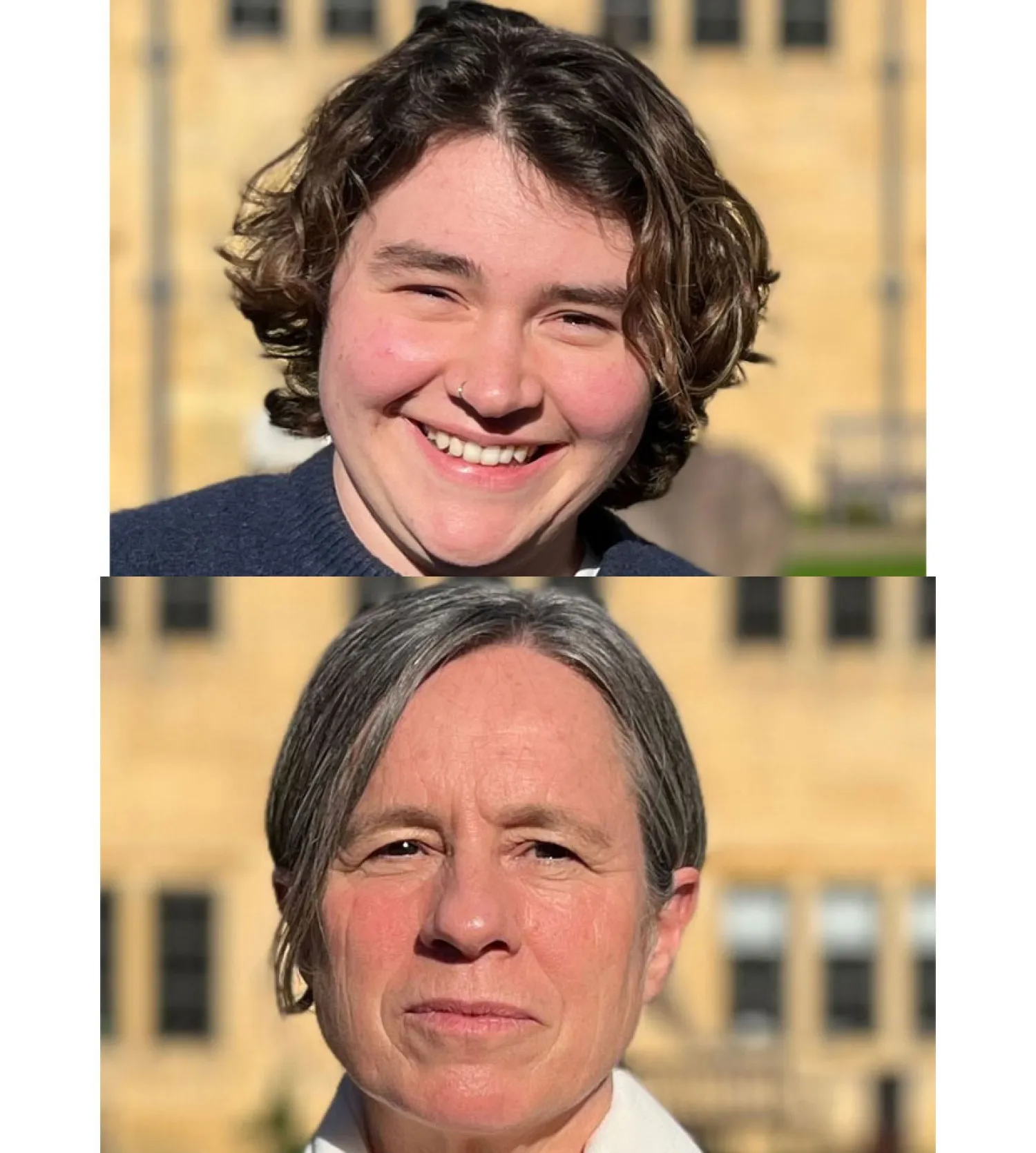
How would you describe the collaborative aspect of your student/supervisor relationship? Are there any particular moments you are most proud of?
Yana: Every time I come to Cécile with another crazy draft, she brings things into context. What would someone in that tradition say to this, and what about this argument, and why not think about this or that question which would really make my thesis say something new and interesting. The collaborative aspect of our supervision is that she lets me write what I want and how I want, but helps me with the bigger picture. In that sense, Cécile's style of supervision with me is not to push me in any given direction, but to gently steer me towards the best version of myself.
Cécile: Yana should be proud of herself as she’s been a model supervisee. She’s extremely responsive in our supervision sessions. She is always quick to see the point of whatever objection I try to formulate. At the same time, she is able to stand her ground and articulate her own voice. When a supervision goes well, we are both in a slightly different intellectual place than when we begin – it is moments like these that I’m most proud of.
What impact does your student–supervisor collaboration have on your academic voice as a scholar or researcher
Yana: My student-supervisor relationship with Cécile has a significant impact on my voice as a scholar because she is a big reason why I am able to express this voice in the first place. Since our first supervision, Cécile has been showering me with praise. Besides giving me excellent constructive feedback, she starts every supervision with discussing what is good about the draft I've presented her with. Of course, I don't believe her: my impostor syndrome makes me think she is saying positive things just to trick me to keep kicking. And well, it does the trick. It makes such a difference to know, when I've reached a slump in my thinking or writing, that my research is actually worthwhile and that something might come out of it.
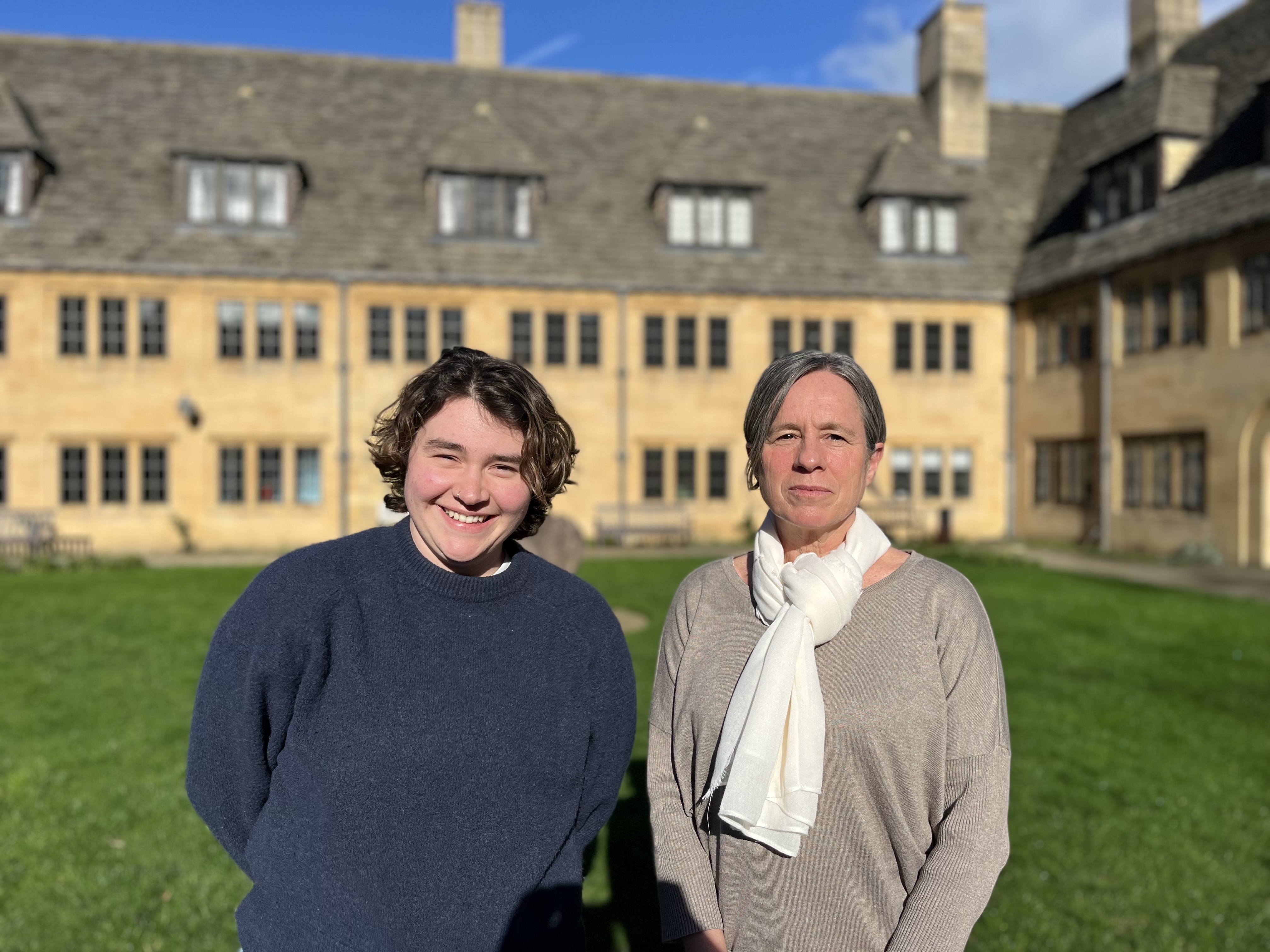 Cécile: I have learnt enormously from Yana and her work as the intersection of liberal law and political philosophy on the one hand, and feminist and queer ethics on the others. I have supervised doctoral students for 30 years now, and it is thanks to them that I keep abreast of cutting-edge literature in my field – a field where students’ interests and focus tend, perhaps more closely than in other fields, to reflect the concerns (both methodological and substantive) of new generations. So students like Yana help me refine and reorient the questions I ask in my own research, too.
In what ways do you co create knowledge, ideas, or innovations
Yana: While Cécile is generally a very encouraging supervisor, with me she specifically encourages my more ambitious ideas. She emboldens me to listen to my intuition and speak my mind. My research is somewhat controversial because it goes against the grain of the mainstream strands of thought I engage with, both substantively and methodologically. This has certainly proved to be challenging, as I get a lot of pushback from academic audiences. Yet Cécile has been convinced of my ideas and has expressed her belief that I can find a way to articulate them, despite the obstacles. So she motivates me to just keep going. This is so precious because it would be so easy for me to give up under the pressure, or to adjust the ambition of my research. By not letting me do that, Cécile demonstrates a brilliant recipe for the production of critical knowledge.
Cécile: Yana is an ideal philosophical conversation partner. She often helps me formulate better whatever objection I bring up, and she provides answers I hadn’t thought of. So I always learn something from talking to her!
What have you learned from each other through working together? (Could you summarise your working relationship in three words?)
Yana: I have learned two big lessons from working with Cécile. The first is: good enough is good enough. It was always hard for me to send drafts to supervisors, since drafts are not perfect and how could I present something unpolished and imperfect to someone whose respect and validation I require (if not psychologically then at least formally for the completion of my degree)? Luckily, Cécile identified this pesky, thorny perfectionism early on and told me a bad draft can still express my ideas productively and help me further my thinking. The second important lesson I have learned from her is that thinking is also part of the work. I have gotten frustrated at my lack of progress, which in my mind equates to written output. However, Cécile has pointed out on multiple occasions that my ideas have changed in between supervisions, and not only changed, but progressed and matured. At some point, I did start to see this and to recognize that my constant thinking about my work does matter. I owe this to her very thoughtful consideration of my work, which extends beyond just the current draft and over to previous drafts and conversations. In light of Cécile's patient pedagogy and my controversial project which causes me a bit of existential anxiety, I would describe our working relationship in three words as "carefully managed ambition".
Cécile: One thing I always learn about when supervising students is to experiment with different ways to find the right balance between support and criticism, and also between academic scrutiny and the more pastoral dimensions of supervision that inevitably come with mentoring relationships. One has to be constantly aware that academic critique can sometimes be experienced as personal criticism. Because Yana produces work of the highest standard, it can be tempting to treat her as an equal colleague and apply tough standards of academic scrutiny, those we would extend to peers. So there can be a tricky balance to find (and I sometimes get it wrong!).
Looking to the future - what are you excited to build, explore, or achieve next — together or individually?
Yana: I am very excited to join Cécile in fostering an environment where difficult ideas can be given the time, space and support they require to be developed. Especially when these ideas come from marginalized voices, and tackle an established status quo that only reproduces the position of privilege. Cécile does this not just by supporting me and other scholars in her capacity as a supervisor and mentor, but also by setting an example for how to move in a field that can be hostile, how to build and maintain a community that does things in a better way. Doing political theory differently or on different, less obviously "political" topics such as feminism, is difficult now, but I'm sure it is much easier than it was for the previous generation of scholars. It is only made easier because of people like Cécile, who show us that it is possible, and help us do it. I very much intend to do the same for generations to come.
Cécile: I hope to contribute to providing Yana with the intellectual and personal confidence to go out there in the world – notably the academic world – with a clear sense of what she can contribute to it, and a clear-eyed awareness of how to approach the challenges that await early-career scholars working in hitherto neglected fields of research. I hope the Nuffield Workshop in Political Theory can continue to be a place where all students are able to participate in ongoing discussions in political theory in a supportive environment.
What hopes do you have for future generations of women scholars at DPIR?
Yana: I hope that future generations of women scholars at the DPIR keep aspiring to succeed, keep pursuing the research topics that interest them, and keep supporting each other.
Cécile: I agree that it is crucial for women to support one another – and this often includes being able to share experiences about being a woman in academia. There is a kind of cross-generational experiential knowledge that is very valuable to all of us. It is very pleasing – and rewarding - that many DPIR female students have become great political theorists, and I hope this trend will continue.