
New Book from DPIR Alumnus Explores the Rise of Technocratic Power in Global Politics

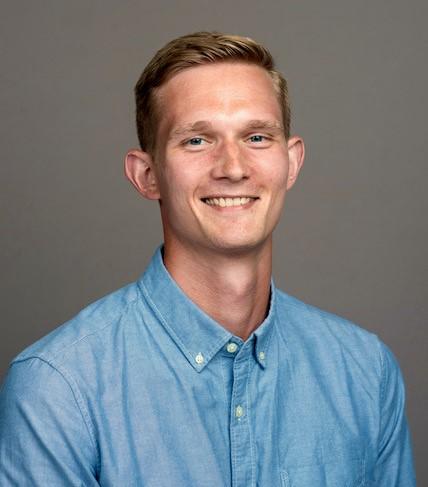
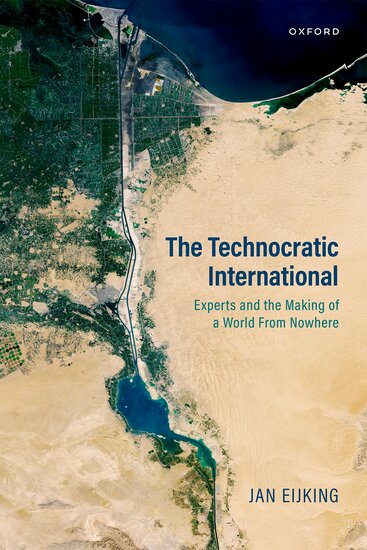
A newly released book published by Oxford University Press by DPIR DPhil in IR alumnus Jan Eijking challenges long‑held assumptions about the role of experts in the making of modern international order. The Technocratic International uncovers how nineteenth‑century experts, engineers, and capitalists helped construct the foundations of global governance.
At a time when debates over the future of international organisations are intensifying, the book intervenes with a new look at their past. It argues that expertise is a crucial part of how international organisations historically imagined the international sphere as such.
Since leaving DPIR, we spoke with Jan, to discover more about his latest publication and life after Oxford:
Tell us about your time at DPIR:
I did my MPhil (2017-19), DPhil (2019-23), and until recently a postdoc (2023-25) at DPIR. My book is based on my DPhil, for which I won the DPIR’s prize for Best Dissertation in IR (2023) and APSA’s Merze Tate Award (2025). Under the supervision of Edward Keene, and with generous support from the Ope-Oxford Cambridge Doctoral Training Partnership programme of the Arts and Humanities Research Council, I investigated how experts came to play such central roles to international organisations, by tracing both the intellectual history of technocratic international thought and some of the first practical experiments with establishing modern international organisations.
What are your memories of this time?
I've very fond memories of my time at the DPIR, and I miss Oxford already! Despite much of my DPhil coinciding with the Covid-19 pandemic, I was part of a lively group of other IR graduate students and early-career researchers working on historical topics — the student-led Seminar in the History of International Politics (SHIP). During the DPhil I also gained my first teaching experience, which was exciting.
 Where has life taken you since?
Since finishing the postdoc at the Oxford Martin Programme on Changing Global Orders, I took up a Marie Sklodowska-Curie Postdoc at the University of Antwerp, where I currently carry out a new research project on the relationship between luxury and global order.
What drove you to write a book about the foundations of modern international organisations and orders?
Edward Keene’s MPhil paper on “The Making of Modern International Society” convinced me that it was in historical perspective that I found the study of international relations most exciting and fascinating. All those abstract concepts and theories, that any student of IR inevitably comes across, made a great deal of sense as we followed their intellectual trajectories and practical applications in the past. I learnt so much from it and got excited to explore this at greater length during the DPhil.
What surprised you most during your research?
How incredibly fascinating the Saint-Simonians are! A relatively neglected group of thinkers and practitioners in early- to mid-nineteenth-century France, but also in fact beyond France, many of whom were involved in early initiatives for international projects like the Suez and Panama canals, international banking, major railway projects. They left a massive paper trail, which is an absolute treasure trove for intellectual historians, international historians, and historically minded IR scholars alike.
What first drew you to the idea that actors/ experts—not just states—were central to shaping international politics?
Back when I wrote my proposal for the DPhil, as well as during the Covid-19 years, pushback against “the experts” — particularly those advising international organisations — was a hot topic. I had started exploring the concept of expertise during my MPhil, and as I became fascinated with the history of international organisations, I developed the project that became my DPhil and eventually the book. Experts are crucial in helping international organisations better understand and tackle the challenges they were created to address. But these organisations also widely rely on the idea that, since they follow expert advice, their interventions are apolitical. That’s a source of legitimacy, but also a source of contention — especially when international organisations, as they sometimes do, actually facilitate unequal global ordering projects. My book tells the story of how thinkers and practitioners have navigated this tension.
The book highlights projects like the Suez Canal and telegraph networks—what made these turning points rather than just engineering feats?
Both are examples of “unequal global ordering projects” facilitated in part by international institutions. I emphasise how these institutions, despite their self-narration as entities floating above politics, can’t be understood outside the power-political — and, at the time I’m concerned with, deeply imperial — contexts in which they operate.
What lessons should today’s policymakers take from this history of expert-driven governance?
My book argues that when international organisations face pushback against “expertise”, it can be unhelpful to simply reiterate the old defence of "listening to the science". The two sides in the debate talk past each other, because they tend to conflate expertise and technocracy. We absolutely need expertise, and avenues by which experts can advise policymaking. But institutions also need to take frustrations with technocracy seriously. The IMF, for example, issues loans on the condition of painful and unpopular public spending cuts. Is it just following economic advice, pure and simple? As long as international organisations consider that justification sufficient, “anti-expert” resentment will remain. In brief, institutions should listen to and learn from pushback rather than dismiss and deflect it. Especially at a time of heated debate about how the UN system may survive its current budget crisis.
If readers take away one key idea from the book, what should it be?
Tough question! Maybe the idea that the international sphere is, all told, a figment of our imagination. Technocrats envisioned it as a sphere free from politics, which gave experts power — but also turned expertise into a target of legitimation and delegitimation. The encouraging flip side is that we can just as well imagine it to be otherwise: perhaps to rethink global governance, and to strengthen institutions in the face of the disruptions of big tech and geopolitical rivalry.
Jan Eijking is a Marie Skłodowska-Curie Postdoctoral Fellow at the University of Antwerp. He was previously William Golding Junior Research Fellow at Brasenose College, and Oxford Martin Fellow at the Oxford Martin Programme on Changing Global Orders. The Technocratic International is based on his 2023 DPhil dissertation at DPIR, for which he won the 2025 Merze Tate Award of the American Political Science Association. His work has been published in the European Journal of International Relations, International Studies Quarterly, and the Review of International Studies. His writing has also appeared in Time, the New Statesman, and the Los Angeles Review of Books.