
DPIR’s Bosco Hung named one of the winners of best talent award
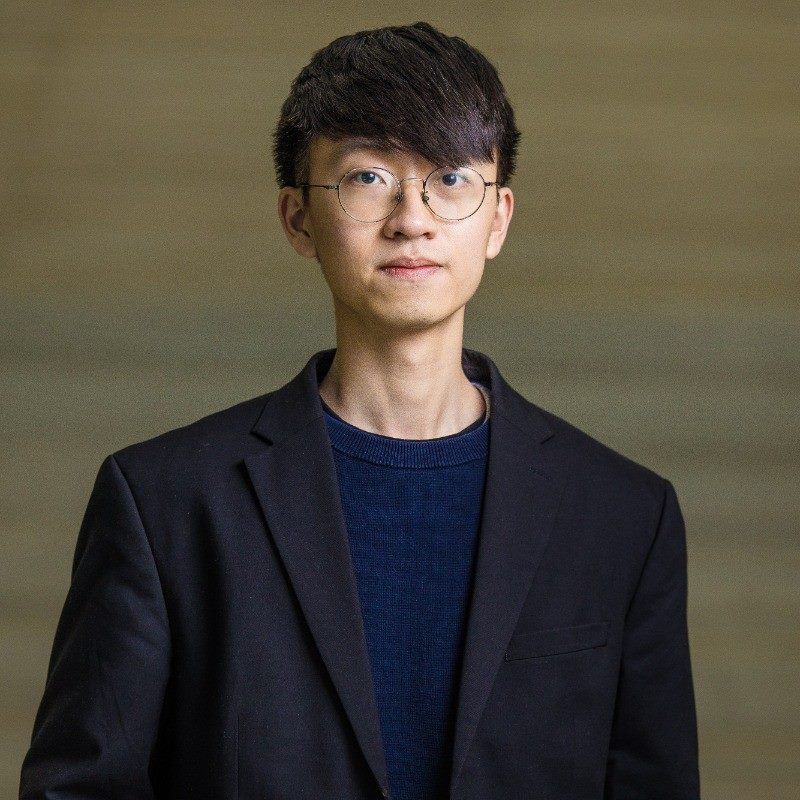
Congratulations to MPhil in International Relations student Bosco Hung, who has been selected as one of the winners of The Nova 111 List 2026 in the UK.
The initiative identifies the best talent across 11 key sectors who have achieved outstanding results or show the potential to have a significant positive impact. Bosco was selected as one of the 10 winners in the Humanities and Social Sciences category in the UK
The winners were chosen through a selection process with an independent jury of experts and more than 200 criteria assessed per profile.
We caught up with Bosco to find out more about the award and what it means to him and his research to be named a winner:
How do you feel to have been named one of the winners?
I am truly honoured to be named to the list as one of the 10 selected winners in the Humanities & Social Sciences category in the UK alongside other young talents whose life stories have been incredibly inspirational and whose achievements have been exceptionally fascinating. My journey in the UK has been full of ups and downs, but the recognition reaffirms to me that I have reached an important checkpoint on the unconventional path I have chosen. There is still a long way to go and the world also keeps on evolving, but I am ready to pursue even greater challenges and translate my potential into actual impacts to drive meaningful changes.
I am thankful for DPIR, which provided me with the freedom and a favourable environment necessary for my various projects. Without the support from the Department, it would not have been possible to scale my initiatives on computational methods, and such recognition would not have been possible either. I would also like to thank my previous supervisors and my current supervisor, Dr Sam Houskeeper, for their generous guidance and continuous encouragement, which have kept me motivated during my academic and professional journey.
What does this mean to your research?
This marks a wonderful recognition of my previous and current projects, from Sino-US relations to North Korea, information warfare, and emerging technology. In particular, the award serves as a validation of my most recent work on promoting interdisciplinary collaboration on computational methods and political science issues at the Oxford Computational Political Science Group (OCPSG). I have been excited about the progress of advances in machine learning, which has transformed how people approach various problems and expanded their toolkits. There is so much the social science community can leverage to drive research advances, and I feel deeply motivated by the prospect, especially as Oxford is setting up a new research centre on advanced social science methods!
What are you currently working on?
My MPhil thesis focuses on how big tech strategically exploits domestic lobbying to achieve transnational policy outcomes in the digital realm. It applies a formal game-theoretical framework and a range of qualitative, quantitative, and computational methods to assess this indirect, triangular form of regulatory capture strategy, which complicates state-business relations within the contested geopolitical climate that securitizes frontier AI technology.
Currently, I am also leading a project investigating the reliability of synthetic LLM agents in modelling multi-dimensional human preferences in conjoint experiments at OCPSG. Outside Oxford, I am working as a Research Collaborator at MIT FutureTech, where I am working with other researchers on mapping the AI governance landscape and assessing the regulatory coverage of various AI risk subdomains and sectors. It has been a pleasure to learn from my collaborators and mentors who have always inspired me and reshaped how I think.