


Image: metamorworks/Shutterstock
Founded in December 2024, we have emerged as a fast-growing international research network dedicated to addressing critical challenges through the rigorous application of computational methods and advanced methodologies. We apply an evidence-based and interdisciplinary approach to build a global community of researchers to pursue high-impact research pathways and solve important research questions that could be addressed more effectively using machine learning or other computational approaches.

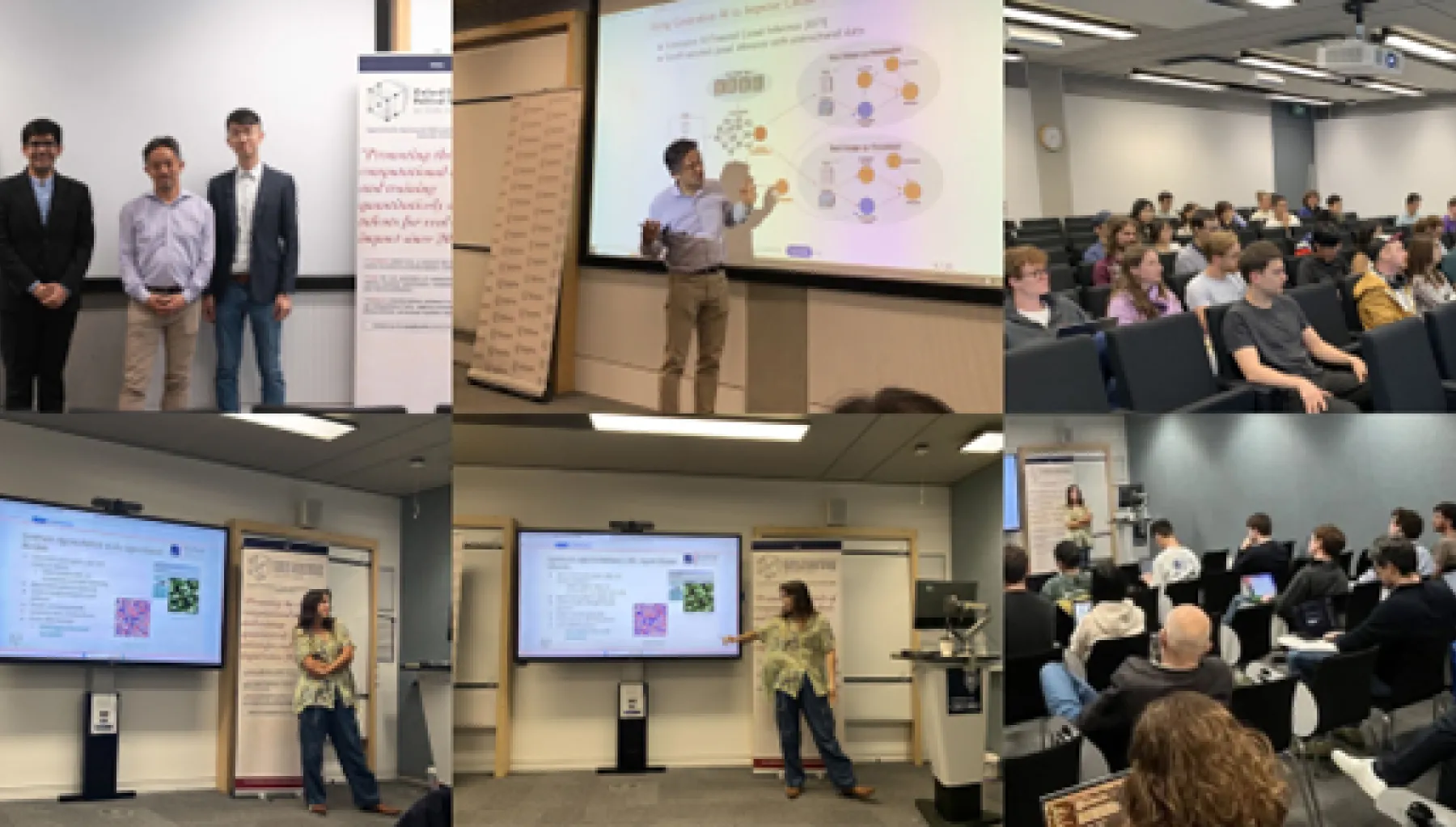

Our Mission
We are driven by three core objectives:
- Transform Oxford into a research hub for computational political science and AI applications by promoting research advances and fostering interdisciplinary collaboration.
- Train the next generation of computational talent by offering research opportunities, academic events, workshops, and peer-learning initiatives, addressing the shortage of quantitatively skilled graduates who can simultaneously understand the conceptual and theoretical side of socio-political challenges.
- Illuminate interdisciplinary pathways for students and researchers to leverage data and computational tools, applying actionable insights to real-world policy problems and making a positive impact beyond academia.
Our Commitment
We are committed to contributing to the public good beyond Oxford:
- We develop programmes and activities that serve as an international capacity-building exercise, equipping the next generation of researchers and practitioners with essential computational skills and methodological expertise to address pressing challenges. By training students and early-career researchers from diverse disciplinary backgrounds and institutions worldwide, we are developing a global network of scholars capable of applying rigorous computational methods to pressing problems and emerging challenges that affect societies everywhere.
- We bridge different stakeholders across academia, policy, and practice. Our policy engagement and international partnerships demonstrate our commitment to ensuring that research findings reach those who can translate them into actionable insights. We place particular emphasis on translating technical and AI-driven insights into accessible, decision-relevant outputs, helping policymakers and practitioners interpret evidence, assess risks, and incorporate data-informed tools into real-world governance processes. By creating spaces for dialogue between researchers, policymakers, practitioners, and the broader public, we facilitate the exchange of ideas and evidence-based solutions to critical political challenges.
- We foster intellectual exchanges that transcend traditional disciplinary and institutional boundaries. Our events and research programmes bring together individuals from diverse backgrounds, creating opportunities for innovative cross-pollination of ideas. This multidisciplinary approach generates novel perspectives on socio-political phenomena and develops methodological innovations that not only advance scholarship but also directly inform policy design and implementation.
We adopt an evidence-based approach and our work sheds light on emerging issues that have direct relevance to public goods. Our work on topics such as online information diffusion, LLM bias, and the manosphere addresses pressing concerns about digital democracy, misinformation, and political polarisation. By producing rigorous, accessible research on these issues and presenting findings at major conferences and policy forums, we contribute to informed public discourse and evidence-based policymaking on challenges that affect citizens across the globe and could be existential in nature.
People
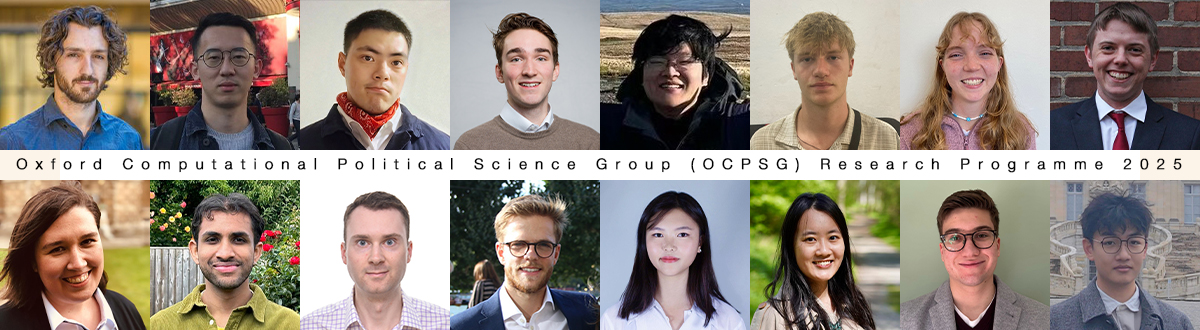
OCPSG is run and formed by people with a diverse range of backgrounds.
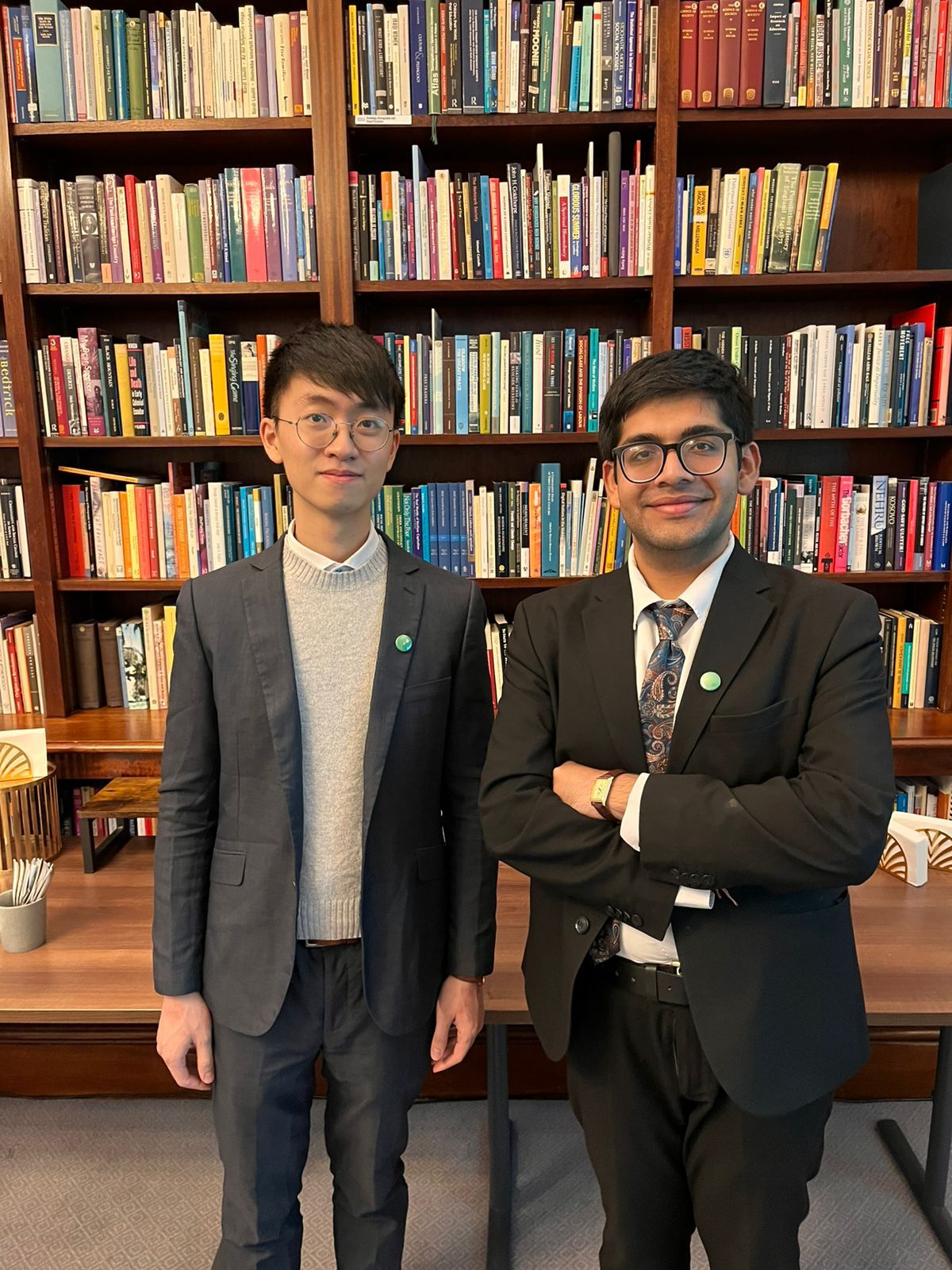
Leadership Team
 Bosco Hung (Co-Founder and Director)
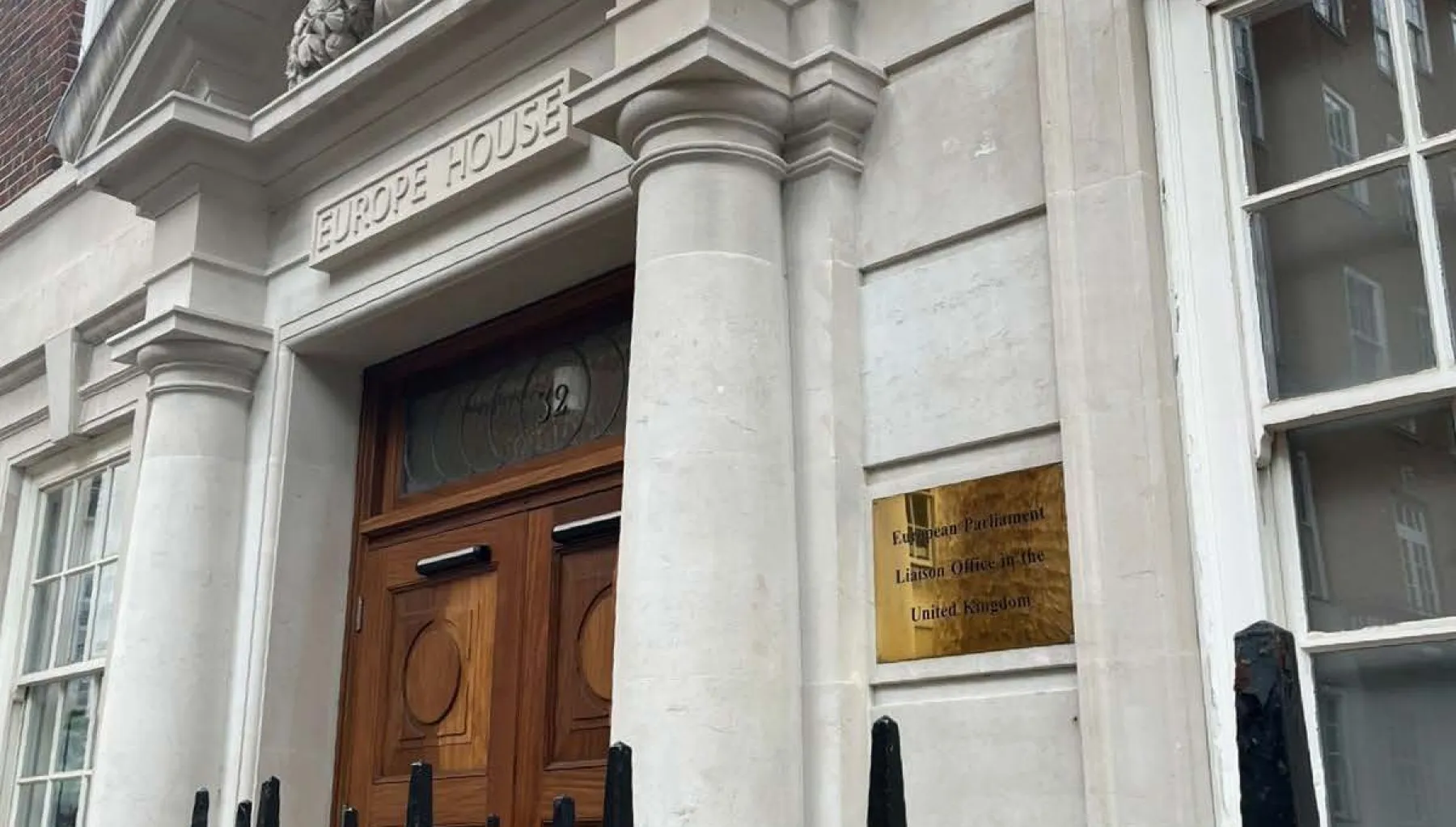
Bosco holds an MPhil in International Relations with Distinction at the University of Oxford. He graduated with a BSc in Politics and International Relations (first class honours) from LSE, where he studied on a full scholarship. He is currently a Research Collaborator at the MIT FutureTech AI Governance Mapping Project. Previously, he was a Researcher at the International Team for the Study of Security Verona and has completed fellowships at the Cambridge AI Safety Hub and the Future Impact Group, where he co-authored research papers on risk management of advanced AI systems. He has written for the Journal of Computational Social Science, the Journal of Cyber Policy, South China Morning Post, The Diplomat, Tech Policy Press, UDN, Initium Media, and other peer-reviewed publications and media outlets. Besides having been interviewed by France 24 and Al Jazeera to provide geopolitical analyses, he was invited to speak at the European Parliament's Liaison Office in the UK about disinformation and media literacy.
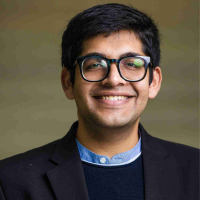 Nachiket Midha (Co-Founder and Director)
Nachiket holds a Master’s degree in Politics from the University of Oxford. He is currently a Predoctoral Researcher at the National University of Singapore’s Department of Economics. He was a finalist for the India Conference at the Harvard Policy Hackathon hosted at Harvard Business School and Harvard Kennedy School. He was also the co-recipient of the King Edward VII Prize at the Entente Cordiale Day. Previously, he has had research stints with think tanks in India and Singapore, including the National University of Singapore’s Institute of South Asian Studies (NUS-ISAS) and the Observer Research Foundation (ORF). His research and views have been published in ThePrint, Columbia Journal of Asia, and South China Morning Post, among others. He is interested in policy applications of synthetic agents and AI safety.
Ari Bersch (Executive Team)
Ari is an MPhil Candidate in Comparative Government at University College, University of Oxford. He graduated summa cum laude from Bowdoin College with a BA in Government and Mathematics, and he won the Philo Sherman Bennett Prize for the best departmental honors thesis. He has presented at the American Political Science Association Annual Meeting, Midwest Political Science Association Conference, and the International Conference on Artificial Intelligence and Teacher Education. His research interests include voting behavior, political communication, political parties, the impact of artificial intelligence on politics, and the role of public opinion in shaping foreign policy.
Xuelong Fu (Executive Team)
Xuelong graduated from the University of Cambridge with an MPhil in Technology Policy. He holds a triple BSc in Artificial Intelligence, Business Administration, and Political Science from the University of Amsterdam. He is a Co-founder of the Data for Public Impact Network (DPIN), through which he has founded and run policy hackathons in Amsterdam and Cambridge. He has contributed to various initiatives, such as serving as an Associate Editor at the MIT Science Policy Review, organising talks for the Cambridge University Science Policy Exchange, and evaluating Amsterdam tech startups for ASIF Ventures. He has also conducted research on sociotechnical AI and now runs a consultancy that implements AI systems for Dutch SMEs.
Sudha Jayanand (Executive Team)
Sudha is a Master’s student in Cognitive Science at the École Normale Supérieure, Paris. Previously, she graduated from LSE with a BSc in Psychological and Behavioural Science (first-class honours), and spent a year abroad at the Stockholm School of Economics, where she conducted a cross-cultural comparative study of anti-elitism and right-wing populist support across Western and Eastern regimes. Sudha was also a Laidlaw Leadership and Research Scholar, where she co-authored a paper on the EU AI Act and conducted fieldwork interviewing EU policymakers and regulators. She was a Lab Manager for the Muthukrishna Lab at LSE, and co-founded Irrationale, a peer-reviewed research journal in the psychological sciences at LSE.
Current Members
Research Leader
Bastián González-Bustamante (Research Leader)
Bastián is a Postdoctoral Researcher in Computational Social Science at Leiden University and an Associate Professor of Public Administration at Universidad Diego Portales. He holds a DPhil in Politics from the University of Oxford, and he works on building large-scale text-as-data pipelines, deploying AI and machine learning, and applying causal inference strategies in downstream analyses. He has published in Social Science Computer Review, Public Opinion Quarterly, World Development, Artificial Intelligence and Law, Government and Opposition, etc. He is currently working on an NWO-funded project using LLMs to analyse sustainable finance flows. In parallel, he contributes to COST Action CA22150 on executive-bureaucratic careers and leads an Enlace-UDP project on NLP and LLMs to examine cabinet politics in presidential democracies.Daria Godorozha (Research Leader)
Daria is currently studying for an MSc by Research in the Statistics department at LSE. Prior to this, she graduated with an MSc in AI with distinction and also studied law at KCL. She was one of the winners of the Stanford/Cambridge AI in law hackathon which primarily focuses on agents and NLP. She has spoken at several conferences on the topic of AI and worked on AI projects for organisations such as the Bank of England, the United Nations, Stanford, a large fine art investment fund, etc. She also has experience in AI education at Stanford, LSE, etc.Sara Gabrielli (Research Leader)
Sara is an LLM student at LSE, focusing on public international law and human rights. She holds a LLB from the University of Luxembourg. Sara has completed internships at the European Parliament, Cerno Law Firm, and various Luxembourg public institutions, including the Ministry of Foreign Affairs and the Council of State. Currently, Sara serves as Vice-President of Aidons-tous Solidarité and as Secretary General of Bonnievale Projects, two organizations dedicated to development cooperation and education across Africa. In 2024, she was honoured with a Human Rights Fellowship by the International Council on Human Rights, Peace and Politics. As Luxembourg’s Youth Delegate to both the European Union and the APF, Sara has been a vital voice in youth policymaking on EU and international platforms.Stephan Wenninger
Stephan is an MSc candidate in Applied Social Data Science at LSE, where he is specialising in machine learning and graph data analytics. His research focuses on the effects of the climate crisis on economic and political development. In his latest work, he leverages quantitative methods to investigate the effects of natural hazards on economically and socially relevant factors, such as home values. Stephan obtained an MSc in Applied Economics and a BA in Political Science from the University of Vienna. In addition to his academic experience, he has a background in journalism.Ryan Ratnam
Ryan is a researcher based out of the Pennsylvania State University and has recently completed an MSc in Social Science of the Internet at the Oxford Internet Institute. His research focuses on online communities, malicious online actors, and digital harms. He has presented this research at several conferences, including in San Francisco, Prague, and Oxford. He has approached these topics with a wide range of qualitative and quantitative methodologies, including interviews, social network analysis, natural language processing, ethnography, and experiments. His work seeks to address data and methodological constraints surrounding hard-to-reach communities, and to produce interventions in line with, and complementary to, current online safety legislative frameworks. Ryan also has a BA in History from UCL and experience in print and video journalism.- Maria Milosh
Maria is a data scientist and researcher working at the intersection of civic technology, political science, and democratic innovation. She holds an MSc in Computational Analysis and Public Policy from the University of Chicago and conducts research in collaboration with the Becker Friedman Institute for Economics, the World Bank, and the City of New York. She teaches a course on Civic Technology and Algorithms for Social Good at Bard College, New York. Maria is active in the international civic tech community, contributing to projects on deliberative democracy, algorithmic accountability, and digital participation. She regularly writes about the future of democratic innovation and deliberative tech.
Researcher
Alice Malmberg
Alice is a political scientist, computational social scientist, and PhD candidate in American Politics and Methodology at UC Davis. Her computational work explores how we might use machine learning and AI strategies to enhance survey and experimental outcomes across the social sciences. Substantively, she explores Americans’ perceptions and reactions to ideologically extreme policymaking and similar state and local political outcomes.- Yiwen Zhang
Yiwen is a PhD student in the Department of Government and the Data Science Institute at LSE, supported by the Enlighten Scholarship. Her research employs computational methods to examine the political economy of inequality, public opinion, and social policy in China and the UK. Prior to LSE, she obtained her degrees from Peking University and worked as a data analyst at the International Organization for Migration.
Research Associate
- Tom Bellens (University of Antwerp)
- Christopher Klamm (University of Mannheim)
- Marta Koch (Imperial)
- Alina Ahmed (De Montfort University)
- Nourhan Hashish (Sciences Po)
- Samuel Inman-Altass (LSE)
- Martin Maitino (Brazilian Centre for Analysis and Planning (CEBRAP))
- Rajwardahan Rana (LSE)
- Carter Roger (University of Cambridge)
- Sanjana Shikhar (LSE)
- Rala Sulami (Princeton)
- Emily Deng (Yale)
- Dillion Lee (LSE)
- Yagmur Ozturk (LSE)
- Victor Y. Wu (Stanford University)
- Love Adu (UC Berkeley)
- Melissa Cardona Agudelo (Lund University)
- Gabriel Oliveira de Alarcão (Administrative Council for Economic Defense (CADE) in Brazil's Department of Economic Studies)
- Natalie Masetti (Columbia)
- Ryan Rousseau (LSE)
- Fynn Bachmann (University of Zurich)
- Peiyu Chen (Chicago)
- Anastasia (Asya) Gergel (NYU / MetaGov)
- Rajib Ahmed (LSE)
- Ari Bersch (Oxford)
- Xuelong Fu (Cambridge)
- Tushar Nagar (Oxford)
- Antonina Sinelnik (NVIDIA)
- Julian Anthony Theseira (Charles University)
Marketing and Communications
- Christian Wang (Oxford)
Alumni
Leadership and Policy Engagement
- Jeffrey Love (Assistant Director/Director of Special Projects) (2025-2026)
- Zoey England (Director of Policy Engagement and Leadership Development) (2025-2026)
Research Leader
- Thomas Brailey (Oxford)
- Calvin Cheng (Oxford)
- Zihao Zhang (Oxford)
Research Associate
- Samuel Allen (Oxford)
- Haoyu Han (Oxford)
- Ewan Messenger (Oxford)
- Amelia Mills (Oxford)
- William Pelletiers (Oxford)
- Başak Bozkurt (Oxford)
- Ryan Ratnam (Oxford)
- James Rice (Essex)
- Lucca Rallo Vanderchmitt (LSE)
- Cindy Feng (Oxford)
- Jianyu Hao (UC San Diego)
- Ruyi Liu (LSE)
- Harrison Moores (LSE)
Join Us
We would love to hear from anyone interested in getting involved. If you would like to join us as part of the leadership team or in another supporting role, please email us at ocpsg@politics.ox.ac.uk and we can discuss this further. If you are based outside Oxford but believe you have something to contribute, you are still very welcome to get in touch. We are open to exploring how you can be part of OCPSG’s future.
Contact
General enquiries: ocpsg@politics.ox.ac.uk
Join our mailing list by filling out this simple form.
Feel free to follow our Instagram and LinkedIn pages for more information.